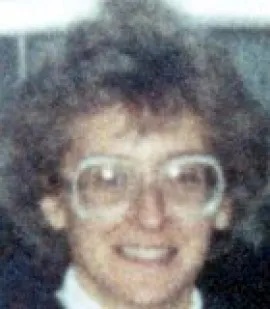
The Murder of Sally Jean Rawlings: A Pilot, a Plan, and a Body Never Found
There is a particular kind of cruelty in a murder that is also a disappearance. Not only is a life taken, but the family left behind is denied even the finality of a body, a grave, a fixed point in the world to mark where someone they loved once existed. Sally Jean Rawlings has been missing since May 26, 1982. She was thirty-four years old, a newly divorced mother trying to rebuild her life in Oklahoma City, and her body has never been recovered. What investigators believe happened to her is methodical, premeditated, and deeply chilling. The man convicted of her murder was a commercial airline pilot who, by all appearances, planned her death with the same deliberateness he might apply to a flight plan.
A Marriage That Turned Dangerous
Sally Brown and Gary Lee Rawlings first met in Pennsylvania in 1976. They married the following year at his parents' home in Denver, Colorado, and in 1980 their daughter, Kimberly Ann, was born. By late 1981, the family had relocated to Oklahoma City. The marriage, by then, had become something frightening. Gary had a bad temper and occasionally beat Sally. What had been a troubled relationship had curdled into something dangerous, and Sally made the decision that many women in her position struggle to make: she left.
In January 1982, she filed for divorce, took their daughter and moved into a shelter for battered women. The divorce was granted within a month. Sally received custody of Kimberly, and Gary agreed not to visit the child for at least six months. Sally moved into the Kirkpatrick Hotel in downtown Oklahoma City and enrolled Kimberly in daycare. She found a secretarial position at the Kerr-McGee Corporation in late March 1982 and, by all accounts, was doing her best to put her life back together. Her coworkers noticed she kept to herself and sometimes appeared distracted, but she was regarded as a capable employee. She had been diagnosed with post-traumatic stress disorder that same year, an unsurprising development given what she had endured in her marriage.
Sally was five feet seven inches tall and weighed around 120 pounds, with blonde hair and eyeglasses. She was not, by any measure, someone who had simply given up. She was a woman actively constructing a safer, steadier life for herself and her daughter. That effort would be cut short on an otherwise ordinary Wednesday morning.
The Day She Vanished
On May 26, 1982, Sally followed her usual routine. She had breakfast with Kimberly at the Kirkpatrick Hotel, then drove her daughter to daycare. She never came back to pick her up. She never returned to the hotel. She has not been heard from since.
What investigators would piece together in the days and weeks that followed painted a picture of a murder that had been carefully staged to look like a voluntary disappearance. Gary Rawlings, who was living with his parents in Colorado at the time, had been in Oklahoma City since at least May 24. He rented a Plymouth Fury while he was there. On one of those days, a man identifying himself as Kimberly's father called her daycare facility to ask what would happen if Sally didn't pick her up that evening. The daycare told him that in that scenario, the child would go home with the facility's director. Gary was, it appeared, already planning for a world in which Sally would not be coming back.
Gary is known to have purchased a .44 Magnum handgun and nine rounds of ammunition during the week of May 24; he told the seller that he wanted to go squirrel hunting.
What followed on May 26 revealed the full scope of what Gary had been preparing. Six times during that month, Gary made arrangements to rent a plane from Charter Air in Oklahoma City. The first five times, he canceled the rental, but the last time, at 10:00 a.m. on May 26, he did take the plane, a Cessna 150, out and didn't return it until early the next morning. When he returned the plane, the gas cap and some of the inside carpeting was missing.
Investigators were eventually able to reconstruct his flight path. On the afternoon of May 26, he stopped for fuel in Dallas, Texas. During his refueling stop, he purchased velour cleaner and called Kimberly's daycare to say Sally would not be able to pick her up that evening. Later that same afternoon, he refueled again in Houston, Texas. An attendant in Houston noticed a large cloth bundle in the baggage compartment of the plane. By evening, he had refueled again at an airport near Houston before eventually heading back to Oklahoma City the following morning. The prosecution's theory, presented at trial, was that Gary had shot Sally, placed her body in his sleeping bag, flown out over the Gulf of Mexico, and dumped her remains into the ocean. It would explain why her body has never been found, and it would account for the flight path, the bundle observed in the cargo hold, and the missing carpeting and gas cap from the returned aircraft.
The Cover-Up
What Gary did after May 26 speaks to either extraordinary coldness or the kind of methodical thinking that becomes possible when a person has spent a long time planning something terrible. He returned the Plymouth Fury the morning of May 27, complaining he had had trouble starting it and requesting another car. Some employees drove the vehicle after he returned it and noticed nothing obviously wrong with it, but they did note that the mat in the trunk's bed was missing. Investigators who examined the car later found what would become some of the most important evidence in the case.
Gary then went to a moving company and arranged to have Sally's furniture transported to Denver, Colorado, telling them she had moved there. Around lunchtime, he went to Kimberly's daycare and presented a letter he claimed was from Sally, stating she had relocated to Florida and that Kimberly would be in Gary's care going forward. The daycare handed the child over. Gary and Kimberly then flew from Oklahoma City to Denver, where Gary had called ahead to ask his mother, Loretta, to meet him at the airport with a uniform because he needed to return to work immediately.
When Loretta arrived, Gary was carrying a blue suitcase and a plastic bag filled with Kimberly's belongings. He didn't have the sleeping bag he'd taken when he left his parents' home several days earlier. He told his mother that Sally had gone to Florida with a boyfriend and had given him permission to keep Kimberly for a month.
What happened next was the turning point of the entire case. Loretta opened her son's suitcase. Inside she found the .44 Magnum handgun, typewritten letters bearing Sally's signature addressed to the moving company and the Kirkpatrick Hotel, the can of velour cleaner, Sally's work keys, a car rental receipt, Sally's savings deposit book, Kimberly's birth certificate, and a photograph of Sally and Kimberly together. Loretta later said the signature on the letters wasn't Sally's and she thought it was her son's. She was frightened by what she found in the suitcase, so she took it to her daughter's house, then called the police. When officers arrived, Loretta told them directly that she believed her son had killed Sally. Gary was arrested and charged with first-degree murder.
The Evidence That Built a Case Without a Body
Prosecuting a murder without a body is one of the most difficult challenges in criminal law. Gary's defense team leaned into this, arguing that Sally had disappeared of her own volition, possibly following a nervous breakdown. They pointed to her documented mental health history and her PTSD diagnosis as evidence that she was capable of simply walking away from her life. Her loved ones denied this. They didn't believe she would willingly give Gary their daughter. And the physical evidence told a story that the defense's theory struggled to explain.
Investigators later found blood inside the driver's side and the trunk of the Plymouth Fury Gary had rented, and in the cargo area of the rented airplane. There was also blood on the gun. DNA testing was not available at the time, but they were able to determine the blood was not Gary's and that it could have been Sally's. Genetic markers found in the blood showed it could have come from just .46 percent of the population. Sally was among that narrow fraction.
A firearm expert said the gun in the suitcase, which had four live rounds in it, had been fired five times since it was last cleaned. Gary had purchased nine rounds and there were four remaining. Five had been discharged. Fingerprint analysis on the envelope addressed to the moving company showed Gary's fingerprints, and his palm print was on one of the money orders inside.
The forged resignation letter sent to Kerr-McGee was another critical piece. Experts were later unable to match the letter to any typewriters Sally had access to, but matched it to a typewriter from Gary's workplace. One of Gary's coworkers reported having seen him use that particular typewriter on May 30. The letter was supposed to make Sally's disappearance look like a voluntary departure from her job. Instead, it helped prove that Gary was systematically manufacturing a false paper trail.
Taken together, the circumstantial evidence was substantial: the premeditated purchase of a firearm, the methodical rental and cancellation of planes before committing to the last flight, the blood in the car and the aircraft, the forged letters, the missing sleeping bag, the velour cleaner purchased mid-flight, the large bundle seen in the cargo hold over Texas. Each individual piece might have been explained away. Together, they told a coherent and damning story.
Conviction and the Question That Remains
Gary was convicted of first-degree murder and received a life sentence. The Oklahoma Court of Criminal Appeals later upheld the conviction. In reviewing the sufficiency of the evidence, the court found that the state had more than met its burden and that a rational jury could have concluded beyond a reasonable doubt that Sally had died as the result of Gary's criminal actions. The defense's appeal, which included arguments about the admissibility of the suitcase evidence, was rejected. The court noted that it was Loretta Rawlings herself, not law enforcement, who had opened the suitcase and then contacted police, meaning no unlawful search had occurred.
Gary Rawlings remains one of a relatively small number of people convicted of murder in the United States without any recovered body and without a confession. The case against him was built entirely on inference, physical evidence, and the behavior of a man who appeared to believe he had covered his tracks thoroughly enough. He had not, in large part because his own mother recognized what she was looking at when she opened that suitcase.
Sally Jean Rawlings has never been found. The prosecution's theory, that her body was dropped into the Gulf of Mexico from the Cessna 150 Gary piloted across Texas that May afternoon, has never been confirmed, and it almost certainly never will be. The ocean offers no such finality. Kimberly, the daughter whose daycare pickup was used as a logistical element in her father's scheme, was two years old when her mother vanished.
What this case represents, beyond the individual tragedy of Sally's life and death, is the particular danger that can persist for women who leave abusive marriages. Sally had done everything right by any external measure. She had filed for divorce. She had moved herself and her daughter into a shelter for battered women. She had secured a custody arrangement. She had found housing and employment and enrolled her child in daycare. She was rebuilding. And the man she had left, rather than accept the outcome of her legally sanctioned departure from his life, spent weeks planning to end it.
The methodical nature of Gary's actions, the repeated plane rental attempts, the advance call to the daycare, the forged letters prepared ahead of time, the sleeping bag that was never seen again, makes it difficult to characterize what happened to Sally as a crime of passion or impulse. It was, by every available measure, premeditated. A pilot who understood flight paths and fuel stops and the cold, deep water of the Gulf of Mexico had spent his evenings thinking through the logistics of making his ex-wife disappear.
He almost got away with it. He would have, perhaps, if not for his mother.
Sally Jean Rawlings deserved better than the life she was given, and she deserved more than the end she received. Her case remains open, and her remains have never been recovered. She was thirty-four years old.
Sources
- The Charley Project: Sally Jean Rawlings
- Oklahoma Cold Cases: Sally Rawlings
- Justia: Rawlings v. State, Oklahoma Court of Criminal Appeals (1987)
- The Doe Network: Case File 3769DFOK