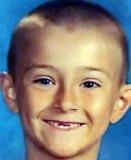
Punished for Being Sick: The Disappearance of Noah McIntosh
Noah Thomas McIntosh was eight years old when he vanished from his family's apartment complex in Corona, California, in early March 2019. He had been born with bladder exstrophy, a birth defect that had been surgically corrected when he was an infant but that left him with ongoing problems controlling his bladder, the kind of lingering medical complication common after that particular surgery. His own father, Bryce McIntosh, refused to accept that explanation, treating Noah's incontinence not as a medical reality but as something to be punished out of him. Years of documented abuse reports followed. Then, in March 2019, Noah disappeared entirely, and investigators would go on to uncover evidence suggesting his father had tortured and killed him.
A Medical Condition Treated as a Behavioral Problem
Bladder exstrophy is a rare congenital condition in which a child's bladder develops outside the body, requiring surgical correction typically performed in infancy. Even after successful surgery, many children who have the condition continue to experience bladder control difficulties well into childhood, a known and expected complication rather than a sign of defiance or laziness. Bryce McIntosh, however, did not accept that his son's ongoing incontinence had anything to do with the medical condition Noah had been born with. Instead, he treated it as willful misbehavior deserving of punishment, and that framing appears to have shaped much of how he treated Noah throughout his short life.
Years of Warnings Ignored
The abuse did not go entirely unnoticed. County social services in California began receiving reports concerning Noah's treatment as early as 2013, when he was still a very young child. Between August 2017 and March 2019 alone, social workers documented at least ten separate allegations of abuse involving Noah, including reports that he had been forcibly dunked in water, handcuffed, and deliberately humiliated in front of others at school. Despite the volume and specificity of these reports, the overwhelming majority of the resulting investigations were closed without any meaningful intervention, leaving Noah in the same household and under the same circumstances that had generated the complaints in the first place.
A Family Split Between Two Apartments
By the time of his disappearance, Noah's parents, Bryce McIntosh and Jillian Godfrey, were living separately, though both maintained residences within the same apartment complex on the 4600 block of Temescal Canyon Road in Corona. That arrangement meant Noah moved between households that remained in close physical proximity to each other, even as the two adults responsible for his care were no longer living together.
"I'll Handle It"
Noah was last definitively seen around March 2 or 3, 2019, though his official last-seen date is sometimes listed as March 6. It was not until March 8 that Bryce told Jillian that Noah had actually been missing for two days already, adding only that he would handle it himself, an answer that did nothing to explain where his own son actually was. It took until March 12, several more days later, for Jillian to finally call the county's Department of Public Social Services and request a welfare check on Noah, the point at which his disappearance formally came to the attention of authorities equipped to investigate it.
A Shopping List That Told Its Own Story
Investigators later reconstructed a disturbing timeline of purchases and internet activity connected to Bryce in the days surrounding Noah's disappearance. On March 4, he bought gloves, bolt cutters, various acid-based products, and a 32-gallon trash can. Digital forensic analysis of his devices turned up internet searches for the properties of sodium hydroxide, sulfuric acid, and muriatic acid, the kind of search history that, taken together with the physical purchases, suggested planning around chemical destruction of something, or someone, rather than any ordinary household use.
The Search Warrant
Police executed a search warrant on Bryce's apartment on March 13, 2019. Inside, they recovered handcuffs, zip ties, latex gloves, and towels stained with what would later be confirmed as blood evidence, physical items entirely consistent with the picture already forming from the abuse reports and the suspicious purchase history.
Two Disposal Sites
The investigation eventually led detectives to two separate locations connected to the disposal of evidence. More than fifty miles away, in the rural community of Aguanga, investigators recovered a trash can containing human blood, along with a piece of paper reading Noah M, latex gloves, towels, and empty containers of drain cleaner. A second site in Temescal Valley yielded additional evidence, including a broken fragment of a wooden spoon and more soiled towels. Despite the extensive evidence recovered from both locations, no trace of Noah's actual remains has ever been found at either site or anywhere else investigators have searched.
Charged With Torture
On March 28, 2019, Bryce McIntosh was formally charged with first-degree murder in connection with his son's death. A subsequent grand jury indictment added a special circumstance allegation of torture to the murder charge, a legal designation that makes a defendant eligible for the death penalty under California law, reflecting how strongly investigators and prosecutors believed the evidence pointed toward deliberate, sustained cruelty rather than a single act of violence. Jillian Godfrey was not charged with murder, but pleaded guilty in December 2019 to two counts of child endangerment, acknowledging her own role in failing to protect Noah despite not being accused of directly causing his death.
Still Awaiting Trial
Given the severity of the charges and the death penalty eligibility attached to the torture allegation, Bryce McIntosh's case has moved through the California court system at the slow, methodical pace typical of capital cases, with pretrial proceedings, evidentiary hearings, and scheduling conferences stretching across years rather than months. As of the most recent publicly available information, the case remains in the Riverside County court system, with Bryce held without bail while the legal process continues to work toward an eventual trial.
Still Missing
Noah Thomas McIntosh has never been found. He would be a teenager today, a fact that sits uneasily alongside everything investigators believe happened to him in the days surrounding March 2019. His case stands as a stark example of how a documented, repeated pattern of abuse reports, spanning years and involving specific, credible allegations of physical mistreatment, failed to trigger the kind of intervention that might have protected him before it was too late. The trash can in Aguanga and the evidence recovered in Temescal Valley have given investigators enough to build a torture and murder case against his father, but they have never given Noah's family the one thing they still do not have: his body, and the chance to finally bring him home.
Sources
- The Charley Project: Noah Thomas McIntosh
- Riverside County District Attorney: Grand jury indicts Corona man for the 2019 murder of his 8-year-old son
- FOX 11 Los Angeles: Noah McIntosh case, father charged with murder of missing 8-year-old Corona boy pleads not guilty
- FOX 11 Los Angeles: Grand jury indicts Corona man for the murder, torture of his 8-year-old son
- KTLA: Corona dad indicted on murder charge in torture-killing of 8-year-old Noah McIntosh
- CBS News Los Angeles: Father of Missing Corona Boy Noah McIntosh Charged With His Murder
- Fox News: California dad charged with murder, torture in missing son Noah McIntosh case
- Stories of the Unsolved: The Disappearance of Noah McIntosh
- Vocal Media: What Happened to Noah McIntosh?