The Heartbreaking Murder of Maren R. Carlson: A Grandmother's Final Days at 99
At 99 years old, Maren R. Carlson should have been spending her final years in peace and comfort, surrounded by family who loved her. Instead, this spirited woman who refused to act her age met an unthinkably brutal end at the hands of her own grandson in a West Valley City, Utah home in November 2021. The horror that unfolded inside that house on Greenmont Drive would shock an entire community and launch a search operation spanning months across the Uinta Mountains. Despite multiple law enforcement agencies, cadaver dog teams, and countless volunteers combing through rugged mountain terrain, Maren's body has never been recovered. Her case stands as a chilling reminder that evil can lurk within one's own family, and that even at the end of a long life, safety is never guaranteed.
A Little Spitfire
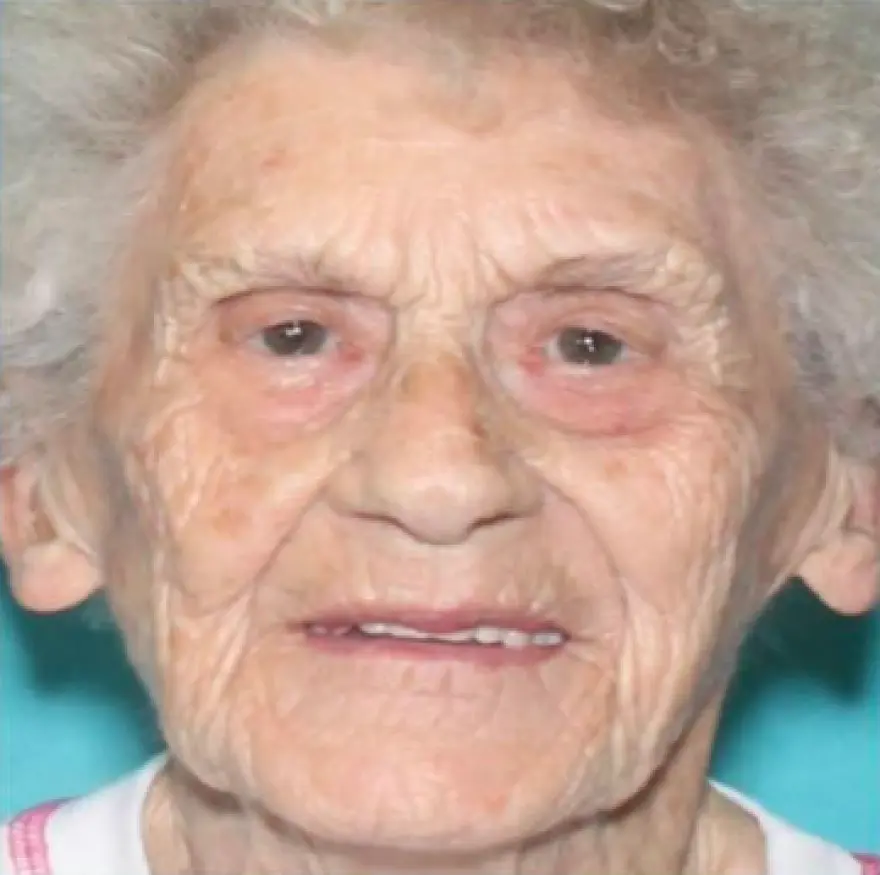
Those who knew Maren Carlson described her with fondness and admiration. Her great-granddaughter, Shaunee Cunningham, remembered her as "a little spitfire" who "did not act her age" and was "full of life." At 99 years old, Maren could have chosen to spend her days in a care facility or living a quiet, sedentary existence. Instead, she remained remarkably independent, maintaining her vitality and personality well into her tenth decade of life.
Maren stood just 4 feet 11 inches tall and weighed only 85 pounds, a petite woman whose small stature belied her strong spirit. She had white hair and moved through the world with a determination that impressed those around her. Despite her fierce independence, Maren had reached a point in her life where she preferred not to live alone. Rather than retreating into solitude, she made the decision to move in with family, specifically with her grandson Garman Shaun Cunningham and his wife.
Shaunee Cunningham, Garman's daughter and Maren's great-granddaughter, lived in the basement of the West Valley home. She recalled her great-grandmother's reasoning for the living arrangement, noting that while Maren was very independent, she had expressed that she simply didn't want to live alone anymore. The house on Greenmont Drive became Maren's home, a place where she could maintain her independence while still being surrounded by family. According to Shaunee, her father loved Maren, and the arrangement seemed to work well.
What Maren couldn't have known was that the home she chose for safety and companionship would become the site of unimaginable violence, and that the grandson she trusted would transform into her killer.
The House of Horrors
On November 1, 2021, Garman Shaun Cunningham, then 50 years old, began a reign of terror inside the home at 3360 South Greenmont Drive in West Valley City. What started that day would continue for nearly two weeks, encompassing not only the brutal murder of his 99-year-old grandmother but also the systematic torture and captivity of his own wife.
According to court documents and the later testimony of his wife, Cunningham's violence against Maren began with an attempt to smother her with a pillow. When that method failed to kill the elderly woman, he resorted to his fists, beating his grandmother with such force that his wife witnessed Maren's head "cave in" from the blows. The image of a grown man using his bare hands to assault a 99-year-old woman weighing less than 90 pounds is almost too horrific to comprehend.
After the initial beating, Cunningham threw his grandmother down a flight of stairs. His wife, watching this nightmare unfold, was then choked by Cunningham when she reacted to what she had seen. But Maren, despite the severe injuries she had sustained, was not yet dead. When Cunningham realized his grandmother was still alive, he carried her small body back up the stairs. Rather than seeking help or stopping his assault, he threw her down the stairs a second time.
Still, remarkably, Maren clung to life. Cunningham then grabbed a piece of Maren's broken walker and stabbed her in the neck with it. He threw her down yet another flight of stairs, this one leading to the basement of the home. His wife could hear what happened next. Cunningham went into the basement carrying a steak knife, telling his wife he was going to "finish her off." The final moments of Maren Carlson's life were spent in that basement, stabbed in the chest with a kitchen knife by the grandson who had claimed to love her.
Cunningham's wife heard him in the garage after he had killed Maren. The sounds that reached her were unmistakable: the noise of tape being pulled and plastic being wrapped. Cunningham was packaging his grandmother's body, preparing it for disposal like so much garbage. He later told his wife what he had done with Maren's remains. He said he had driven up a mountain with her body, dumped it off the side of a road, and rolled it down an incline in hopes that nobody would see her. Maren's final resting place would be somewhere in the wilderness, alone and undiscovered.
Eleven Days of Captivity
While the murder of Maren Carlson was horrific enough on its own, it occurred within the context of an even broader nightmare. Cunningham's wife found herself a hostage in her own home, subjected to nearly two weeks of torture that defies comprehension. From November 1 through November 12, 2021, she endured treatment that would later be detailed in charging documents and news reports.
Cunningham handcuffed his wife to a rocking chair, preventing her from moving freely or escaping. He beat her repeatedly, cut her with both knives and broken glass, and burned her with cigarettes. The wounds on her body would later be visible to police: head wounds, open sores, and healing burns that testified to days of abuse. He choked her on multiple occasions, each time bringing her to the brink of death before releasing his grip. He threatened her with a gun, holding it to her head and making clear that he would kill her if she tried to leave or call for help.
The torture extended beyond physical violence. Cunningham engaged in psychological warfare, raping his wife repeatedly throughout her captivity. He deprived her of sleep, keeping her in a state of exhaustion that made resistance increasingly difficult. He controlled her access to food and water, withholding basic necessities to further break her down. In perhaps one of the most bizarre and cruel acts, he forced her to drink WD-40, the industrial lubricant, for reasons that can only be imagined.
Throughout this ordeal, Cunningham's wife was threatened repeatedly. If she went to police, he told her, he would kill her. Given that she had witnessed him murder his own grandmother with shocking brutality, these were not idle threats. She had every reason to believe he would follow through. The woman was trapped in a house that had become a prison, with a man who had demonstrated he was capable of anything.
The Desperate Escape
On November 12, 2021, Cunningham's wife saw an opportunity and took it. After 11 days of captivity, beatings, sexual assault, and psychological torture, she managed to escape by jumping over a fence. Once over that fence, she ran to a neighbor's home and used their phone to call 911. The call she made would finally bring law enforcement to the house on Greenmont Drive and expose the horrors that had been unfolding behind closed doors.
When West Valley City police responded to the domestic violence call, they immediately noticed the condition of the woman who had escaped. Her body bore the evidence of her ordeal: wounds all over, head injuries, open sores, and burns in various stages of healing. She told officers about her captivity, about the torture she had endured, and critically, about what had happened to Maren Carlson. She reported that Cunningham had murdered his grandmother during the same period that he had been holding her hostage.
Police attempted to make contact with Cunningham, but he refused to come out of the house. What followed was a tense, 30-minute standoff. The situation was serious enough that police used reverse 911 calls to warn nearby residents to stay indoors. Through windows, officers could see Cunningham moving about inside. They heard him fire three shots. The sound of breaking windows and large objects being moved echoed from the house. Cunningham was barricading himself inside, preparing for a confrontation.
A photographer from Gephardt Daily was on scene and captured the dramatic moments as the standoff unfolded. The residential neighborhood, typically quiet, had become the site of a major police operation with SWAT teams and multiple law enforcement vehicles surrounding the Cunningham home.
Armed and Dangerous
When Cunningham finally emerged from the house, he was not surrendering peacefully. He came out wielding a sword, a medieval weapon that seemed to fit the archaic brutality of his crimes. He threw the sword aside and attempted to run, but West Valley City police had anticipated this. A police K-9 unit was deployed, and the dog grabbed hold of Cunningham, bringing him down before he could get far.
Even after being caught by the police dog, Cunningham continued to fight. Officers struggled to take him into custody as he resisted arrest, still trying to battle his way free despite being surrounded by armed law enforcement. Eventually, he was subdued, handcuffed, and transported to the Salt Lake County Jail. He was initially booked on 11 offenses related to what he had done to his wife, including aggravated kidnapping, aggravated assault, felony discharge of a firearm, and assaulting a peace officer.
But the investigation into what had happened in that house was just beginning. Police entered the residence and began processing it as a crime scene. What they found would corroborate every horrific detail that Cunningham's wife had reported.
The Evidence Speaks
Forensic investigators conducted a thorough search of the Cunningham home, and the results painted a picture consistent with the brutal murder described by Cunningham's wife. Using forensic testing methods, investigators found evidence of large quantities of blood in multiple locations throughout the house. At the base of the stairs where Maren had been thrown, there was blood. In the downstairs laundry room, more blood. In the garage where Cunningham had wrapped his grandmother's body, investigators found additional blood evidence.
The blood spatter patterns and locations matched the sequence of events as described: the initial beating and first fall down the stairs, the continuation of the assault, and the eventual transport to the garage. Investigators also found evidence that someone had attempted to clean up the blood, though the efforts had been insufficient to eliminate all traces. Luminol and other forensic techniques revealed what the naked eye might have missed.
All of the carpeting and furniture from Maren's bedroom had been removed from the house, another indication that Cunningham had attempted to destroy evidence. On November 4, 2021, a dumpster had been delivered to the Cunningham home. When investigators examined its contents, they found items that told the story of a murder and its cover-up: a broken walker (pieces of which had been used as a weapon), bedding, clothing, carpeting, cleaning supplies, and a shower curtain. All of these items were covered in human blood.
DNA testing would later confirm that the blood belonged to Maren Carlson. The walker was particularly significant, as Cunningham's wife had described him stabbing Maren in the neck with a piece of her broken walker. The physical evidence matched the witness testimony perfectly.
The house also contained other disturbing items. Multiple live rounds and discharged bullet casings were scattered throughout various rooms, evidence of the shots Cunningham had fired during the standoff. Investigators recovered various knives, two guns, handcuffs that had been used to restrain Cunningham's wife, and multiple swords. The home had been an arsenal, filled with weapons that Cunningham had used to inflict pain and maintain control.
The Search Begins
With Maren Carlson missing and strong evidence suggesting she had been murdered, investigators faced a critical question: where was her body? Cunningham had told his wife that he drove up a mountain and disposed of Maren's remains somewhere off the side of a road. But mountains are vast, and without more specific information, finding a body weighing less than 90 pounds in the wilderness would be extraordinarily difficult.
Investigators turned to technology for help. Cell phone tracking data from Cunningham's phone showed that he had been in the area of Kamas, Utah, near State Route 150 on November 2, 2021. State Route 150 is also known as Mirror Lake Highway, a scenic road that winds through the Uinta Mountains. The area is part of the Uinta-Wasatch-Cache National Forest, a massive expanse of wilderness covering over 2.1 million acres.
Based on the cell phone evidence, investigators focused their search efforts on the High Uintas near State Route 150 and also near State Route 35. This narrowed the search area somewhat, but the terrain was still incredibly challenging. The Uinta Mountains are remote, rugged, and heavily forested. Deep ravines, steep inclines, and dense vegetation make searching difficult even under the best conditions.
West Valley City Police partnered with multiple agencies for the search operations. The Summit County Sheriff's Office, the Wasatch County Sheriff's Office, their respective search and rescue teams, and multiple cadaver dog teams all participated in efforts to locate Maren's remains. Dogs trained to detect human decomposition were brought to the area, sniffing through the wilderness in hopes of picking up a scent.
Searchers combed through areas along the highways, venturing down slopes and into ravines where a body might have been rolled or thrown. They looked for any signs: disturbed earth, unusual scents, scraps of fabric, or anything else that might indicate human remains. The searches were exhaustive and repeated multiple times over the course of months.
Despite all these efforts, Maren Carlson's body was never found. The wilderness had swallowed her up, and Cunningham's secret of exactly where he disposed of her body would go with him to the grave.
Charges Filed
In December 2021, the Salt Lake County District Attorney's Office formally charged Garman Shaun Cunningham with an extensive list of crimes. For the murder of his grandmother, he faced charges of aggravated murder and obstructing justice, the latter charge relating to his disposal of her body and attempts to hide evidence of the crime. These were first-degree and second-degree felonies respectively.
For what he had done to his wife, Cunningham was charged with aggravated kidnapping, a first-degree felony. This charge encompassed the 11 days he had held her against her will, subjecting her to torture and abuse. He also faced two counts of aggravated assault and three counts of illegal discharge of a firearm, all third-degree felonies. The illegal discharge charges related to the shots he had fired during the standoff with police.
The case was particularly significant because it represented another example of a no-body murder prosecution. Without Maren's remains, prosecutors would need to rely on circumstantial evidence, witness testimony, forensic evidence, and the overall pattern of behavior to prove that Cunningham had killed his grandmother. However, the evidence was strong. They had an eyewitness who had watched most of the murder unfold. They had blood evidence throughout the house. They had the broken walker and other items covered in Maren's blood. They had Cunningham's own statements to his wife about disposing of the body. And they had cell phone tracking data placing him in the area where the body was believed to have been dumped.
Cunningham was held without bail at the Salt Lake County Jail, awaiting trial on all charges. Given the severity of the charges and the strong evidence against him, prosecutors were confident they could secure a conviction even without recovering Maren's body. The case moved forward through the court system as Cunningham's attorneys prepared a defense and prosecutors built their case.
A Family Blindsided
For Shaunee Cunningham, the revelations about her father's actions were devastating and almost impossible to process. On November 3, 2021, while her father was already holding his wife captive and had already killed his grandmother, he called Shaunee. During that phone call, he told her that he had sent Maren to Texas for a short period. It was a lie designed to buy time and prevent Shaunee from checking on her great-grandmother.
Shaunee had no reason to doubt her father at the time. She thought Maren was safe in Texas, perhaps visiting other family or taking a trip. It wasn't until later, after her father's arrest and the subsequent news coverage, that Shaunee learned the truth. The woman she had described as full of life had been brutally murdered. The father she thought she knew had committed an unspeakable act of violence against his own grandmother.
In interviews with local media in the months following the incident, Shaunee spoke about her struggle to come to terms with what had happened. "At the very beginning it was overwhelming," she said. "I'm still having a hard time. I go to therapy and stuff like that." She described how her father's actions had blindsided her. To learn that he was capable of such brutality, especially against Maren, was something she was still trying to process.
The trauma extended beyond the immediate shock of the crimes themselves. Shaunee had lost multiple family members in a short period. "In the last eight months, I have buried all of my family," she explained to reporters in August 2022. She had buried her father. She had buried his mother. But she still couldn't bury Maren because her body hadn't been found. That lack of closure weighed heavily on her.
"She's the last of my family that I need to bury," Shaunee said. "I want her home." The inability to lay Maren to rest properly, to have a grave to visit and a place to mourn, added another layer of pain to an already unbearable situation. Maren deserved better than to be lost in the mountains, her final resting place unknown and unmarked.
Death in Custody
While awaiting trial in March 2022, approximately four months after his arrest, Garman Shaun Cunningham died by suicide while in custody at the Salt Lake County Jail. The specifics of how he managed to take his own life while incarcerated have not been publicly disclosed, but on Thursday, August 18, 2022, West Valley Police officially confirmed in a prepared statement that Cunningham had "died by suicide."
His death meant that he would never face trial for his crimes. There would be no courtroom testimony from his wife describing her ordeal. There would be no jury verdict finding him guilty or not guilty. There would be no sentencing hearing where Maren's family could address him directly and express the impact of his actions. Cunningham had taken that opportunity away from everyone involved.
For Shaunee Cunningham, her father's suicide added another complicated layer to her grief. She was mourning him even as she grappled with horror at what he had done. She was processing the loss of the father she thought she knew while simultaneously coming to understand who he really was: a man capable of extreme violence against the most vulnerable members of his own family.
For Cunningham's wife, his death might have brought a sense of relief, knowing that her abuser could never hurt her again. But it also meant she would never see him held accountable in a court of law. The justice she might have found in a conviction and sentence was denied to her.
For law enforcement, Cunningham's death was frustrating. Had he lived to go to trial, there might have been opportunities during plea negotiations or testimony to learn exactly where he had disposed of Maren's body. Defendants sometimes trade information about remains in exchange for reduced charges or sentencing considerations. With Cunningham dead, that last potential source of information was gone.
A Public Plea for Help
In August 2022, as fall approached and hunting season drew near, the West Valley City Police Department made a public appeal for assistance. They issued a statement asking anyone who would be spending time in the Uinta Mountains, particularly around the Kamas area near State Routes 150 and 35, to keep an eye out for evidence in Maren Carlson's homicide case.
Roxeanne Vainuku, Deputy Director of Communications for the West Valley City Police Department, explained the timing of the renewed appeal. "In the next few weeks, the hunting season will start," she said. "It'll start with the archery season. It will become fall, and there will be leaves in the mountains that people want to see, and so we know that these next couple of months are going to be a time when people are in Utah's mountains."
Fall and winter bring thousands of Utahns and tourists to the mountains for hunting, hiking, and recreation. These outdoor enthusiasts travel areas that might not be frequently visited during other times of year. Police hoped that someone hiking off a trail, hunting in remote areas, or simply exploring the wilderness might stumble upon evidence that had eluded organized search efforts.
Police provided specific details about what to look for. Maren was last seen wearing light pink pajamas with a floral design. She may also have been wearing a robe. With her small stature and light weight, her remains might not be immediately obvious, potentially hidden by vegetation or terrain. Additionally, investigators believed there could be a black garbage bag in the area that could hold evidentiary value, possibly containing additional evidence from the crime scene that Cunningham had disposed of along with the body.
Anyone who located items potentially related to the case was asked to note the GPS coordinates of the location if possible and to contact the West Valley City Police Department at 801-840-4000. Police stressed that people should not disturb potential evidence but should instead mark the location and call authorities.
Vainuku also addressed the purpose of the continued search efforts, noting that with Cunningham dead, the goal was no longer prosecution. "It's not about prosecuting the person that we believe is responsible but what this is about is about bringing some peace to this family whose loved one's body is missing," she said. "We want to bring some comfort to them knowing that their loved one's body has been recovered."
The public appeal was covered by multiple local news outlets, spreading awareness of Maren's case throughout Utah and beyond. Flyers and posters with Maren's photograph, description, and information about where her body might be located were distributed and posted in areas frequented by mountain-goers.
A Life Cut Short at 99
The tragedy of Maren Carlson's murder is compounded by the fact that she had lived 99 years, nearly a full century, only to have her life end in such brutal fashion. She had survived the Great Depression, World War II, the Korean War, Vietnam, and countless other historical events. She had raised children, seen grandchildren and great-grandchildren born, and accumulated nearly a century of experiences and memories.
At 99, Maren should have been protected, honored, and cherished. In many cultures, elders are revered for their wisdom and experience. They are cared for with tenderness and respect, particularly when they become frail and vulnerable. Instead, Maren was beaten, stabbed, and thrown down stairs multiple times by her own grandson. The very family connection that should have guaranteed her safety became the source of her destruction.
The details of how Maren died are almost too painful to contemplate. The terror she must have felt as her grandson attacked her, the physical pain of being beaten and thrown down stairs, the betrayal of realizing that someone she trusted and loved was killing her. She died in pink pajamas, not in her bed peacefully but in a basement after being stabbed with a kitchen knife. Her last moments were filled with violence and fear.
After her death, Maren was wrapped in plastic and tape like garbage. She was driven up a mountain and dumped off the side of a road, rolled down an incline to hide her from view. Her final resting place is somewhere in the vast wilderness of the Uinta Mountains, alone among the trees and rocks, visited only by wildlife and perhaps the occasional unknowing hiker passing by.
The Ripple Effects
The murder of Maren Carlson and the torture of Cunningham's wife sent shockwaves through West Valley City and the broader Utah community. How does a community process the knowledge that such extreme violence occurred in a residential neighborhood? How do neighbors reconcile the fact that they lived near a house where a grandmother was being murdered and a woman was being held captive for nearly two weeks?
The case also raised questions about warning signs and whether anything could have been done to prevent the tragedy. Were there indicators of Cunningham's capacity for violence that went unnoticed or unreported? Did anyone outside the home suspect that something was wrong during those 11 days of captivity? The answers to these questions may never be fully known.
For law enforcement, the case represents both a success and a failure. They successfully rescued Cunningham's wife and built a strong case against him for multiple serious charges. The forensic investigation was thorough, the evidence collection was comprehensive, and the charging decisions were appropriate. However, the failure to recover Maren's body means the case can never be fully closed. That lingering incompleteness is frustrating for investigators who pride themselves on bringing closure to families.
The case also highlights the challenges of no-body murder prosecutions. While prosecutors were confident they could convict Cunningham even without remains, his death by suicide meant they never got the chance to test that confidence in court. For other jurisdictions considering whether to file charges in similar cases, the Maren Carlson case offers both encouragement (strong circumstantial evidence can be sufficient) and caution (defendants may find ways to avoid accountability).
Searching in Vain
Despite the public appeals, the involvement of multiple law enforcement agencies, the deployment of cadaver dog teams, and countless hours of search efforts, Maren Carlson's body has never been recovered. The Uinta-Wasatch-Cache National Forest is simply too vast, too rugged, and too wild. A small woman weighing 85 pounds could be anywhere in that immense landscape.
Consider the scale of the challenge: the forest covers over 2.1 million acres of mountain terrain. Even narrowing the search to the areas around State Routes 150 and 35 still leaves thousands of potential locations. If Cunningham rolled Maren's body down an incline as he claimed, it could have traveled a significant distance before coming to rest, potentially lodging under fallen trees, in a ravine, or in an area inaccessible without technical climbing equipment.
Weather and wildlife also complicate matters. The elements can scatter remains, and animals can carry away bones. Several months elapsed between Maren's death in November 2021 and the intensive search efforts in 2022. During that time, snow fell and melted, rain came and went, and the normal processes of decomposition occurred. With each passing season, the chances of finding recognizable remains diminished.
The cadaver dogs, despite their training and impressive accuracy in many cases, found no trace of Maren. This could mean that her body is in a location the dogs haven't reached, that environmental factors have masked the scent, or that the passage of time has reduced the scent signature below the threshold of detection. Whatever the reason, the dogs that had proven so valuable in other cases came up empty in the search for Maren.
As of 2024, nearly three years after her murder, Maren Carlson remains missing. Her case file stays open with the West Valley City Police Department. Detectives continue to hope that someone hiking in the mountains might stumble upon evidence, that a winter snowmelt might expose something previously hidden, or that some other development might finally lead them to Maren's resting place.
Justice Denied, Closure Denied
In a typical murder case, there is a progression: discovery of the body, investigation, arrest, trial, conviction, and sentencing. The family of the victim can attend the trial, hear the evidence presented, see the defendant held accountable, and witness justice being served. After the trial, they can focus on mourning and healing, knowing that the legal process has concluded and the person responsible has been punished.
For Maren Carlson's family, none of that happened. There was no body to discover, only the horrifying account from an eyewitness. There was an arrest, but Cunningham's suicide prevented a trial. There was never a conviction, never a sentencing hearing, never an opportunity for victim impact statements. The family never got to confront him in court, never got to hear a judge impose a sentence, never got to see him led away to prison for the rest of his life.
This lack of conventional justice makes healing even more difficult. Shaunee Cunningham expressed this pain clearly when she spoke about her desire to find Maren's body and bring her home for burial. Without that closure, without the ability to lay her great-grandmother to rest with dignity, the trauma of the murder remains raw and unfinished.
The case also represents a broader issue in the criminal justice system. When defendants die before trial, whether by suicide or other means, it leaves families and communities in a state of limbo. The presumption of innocence means that Cunningham was never officially convicted of murder, even though the evidence against him was overwhelming. This technicality matters little to those who know what he did, but it prevents the formal declaration of guilt that many families need for psychological closure.
Remembering Maren
In the aftermath of her murder, it is important to remember Maren Carlson not just as a victim but as a person who lived a long, full life. She was 99 years old, meaning she was born in approximately 1922. She lived through the Roaring Twenties, the Great Depression of the 1930s, World War II in the 1940s, and every subsequent decade up through the 2020s. The world changed immeasurably during her lifetime, from the widespread adoption of automobiles to the digital revolution to the smartphone age.
She was described as a spitfire, someone with energy and personality even at an advanced age. She was independent and capable, choosing to live with family not because she required constant care but because she preferred companionship. She was loved by her great-granddaughter Shaunee, who spoke of her with warmth and affection even amid the trauma of learning how she died.
Maren was a grandmother and great-grandmother, a matriarch who had raised generations. She had accumulated 99 years of stories, wisdom, and experiences. She had loved people, been loved in return, and left an impact on those who knew her. Her life mattered far beyond the terrible circumstances of her death.
When thinking about Maren Carlson, it would be easy to focus exclusively on how her life ended. The violence was so extreme, so shocking, that it threatens to overshadow everything else. But Maren was so much more than a murder victim. She was a woman who lived for nearly a century, who touched countless lives, and who deserved to spend her final days in peace and comfort.
An Open Case
As of this writing, the case of Maren R. Carlson remains technically open. While police have no doubt about what happened to her or who killed her, the absence of her body means there are still questions without answers. Where exactly is she in the Uinta Mountains? What specific location did Cunningham choose for her disposal? Are her remains intact or have they been scattered by animals and weather?
The West Valley City Police Department continues to encourage anyone who spends time in the Uinta Mountains, particularly around Kamas, State Route 150, and State Route 35, to remain alert for any evidence. Hikers, hunters, campers, and other outdoor enthusiasts are asked to be observant. A scrap of pink fabric, a black garbage bag, or any other unusual item in a remote area could be the break investigators need.
The Utah Bureau of Criminal Investigation maintains Maren's case file as a cold case, though the trail is actually quite warm in terms of knowing what happened. The challenge is not solving the mystery of who killed Maren Carlson or how she died. The mystery is purely about locating her remains so that she can be recovered and laid to rest.
For the law enforcement officers who worked on this case, the inability to find Maren represents one of those frustrations that comes with the job. They did everything right in terms of the investigation. They rescued a torture victim, collected strong evidence, filed appropriate charges, and built a solid case. But through circumstances beyond their control, Cunningham evaded trial through suicide, and despite exhaustive search efforts, Maren remains missing in the mountains.
A Legacy of Pain
Garman Shaun Cunningham's legacy is one of pain, brutality, and destroyed lives. He murdered his own grandmother in one of the most vicious ways imaginable, beating and stabbing a 99-year-old woman before throwing her body away like trash. He tortured his wife for nearly two weeks, subjecting her to sexual assault, physical abuse, and psychological torment. He fired on police officers and resisted arrest even when escape was impossible. And finally, he took his own life, denying everyone the justice of a trial and the potential information about where he had disposed of his grandmother's body.
His daughter Shaunee is left to pick up the pieces, trying to understand how the father she thought she knew could have been capable of such evil. She must live with the knowledge of what he did while also grieving the loss of multiple family members. The trauma she has experienced will likely affect her for the rest of her life, requiring ongoing therapy and support.
Cunningham's wife, whose name has been withheld from public reporting, survived her ordeal but will carry the physical and emotional scars forever. The torture she endured over those 11 days will never be erased from her memory. She witnessed the murder of an elderly woman, was repeatedly assaulted and threatened, and lived in fear that each moment might be her last. Her escape was brave, and her willingness to testify about what happened was crucial to the investigation, but the cost to her wellbeing was immense.
The Mountains Keep Their Secrets
Somewhere in the Uinta Mountains of Utah, among the pine trees and aspen groves, along the slopes and in the ravines, lie the remains of Maren R. Carlson. She is out there, waiting to be found, waiting to be brought home. The mountains have kept her secret for years now, and despite the best efforts of searchers, they may keep it forever.
Every fall, as hunters head into the High Uintas, and every summer, as hikers explore the trails near Mirror Lake Highway, there is a chance that someone might find her. A flash of pink fabric caught on a branch, a glimpse of something unnatural in a remote gully, a discovery that would finally allow Maren to be recovered and given the dignified burial she deserves.
Until that day comes, if it ever does, Maren Carlson's case remains a haunting reminder of how evil can exist within families, how vulnerable even our elders can be, and how violence can shatter lives in ways that reverberate for years. She lived for 99 years, nearly a century of life, only to have it end in brutality and to remain lost in the wilderness.
Her family continues to hope. Law enforcement continues to check leads. And the mountains continue to keep their silence, holding Maren in their vast embrace, somewhere along the roads and trails where Utah families go to find beauty and peace. One day, perhaps, she will be found. Until then, her story serves as both a tragedy and a plea: remember Maren Carlson, and if you venture into the Uinta Mountains, keep your eyes open for evidence of this crime so that a 99-year-old spitfire can finally come home.
Sources
- True Crime Daily: Utah Police Seek Help Finding Missing Grandmother
- Utah DPS Criminal Identification: Maren R. Carlson
- The Charley Project: Maren R. Carlson
- ABC4 Utah: Police Search for Missing Grandmother
- ABC4 Utah: Missing in Utah: In Search of Maren Carlson
- Fox 13 Utah: West Valley City Police Searching for Missing Grandmother
- The Salt Lake Tribune: Utah Detectives Ask Hunters to Help Find Body
- KSL: Police Seek Public's Help Finding Utah Murder Victim's Body
- The Daily Beast: Sword-Wielding Rapist Held Woman Captive
- KUTV: Mountain-Goers Asked to Look for Evidence
- Fox 13 Utah: Family Desperate to Find Body of Grandmother