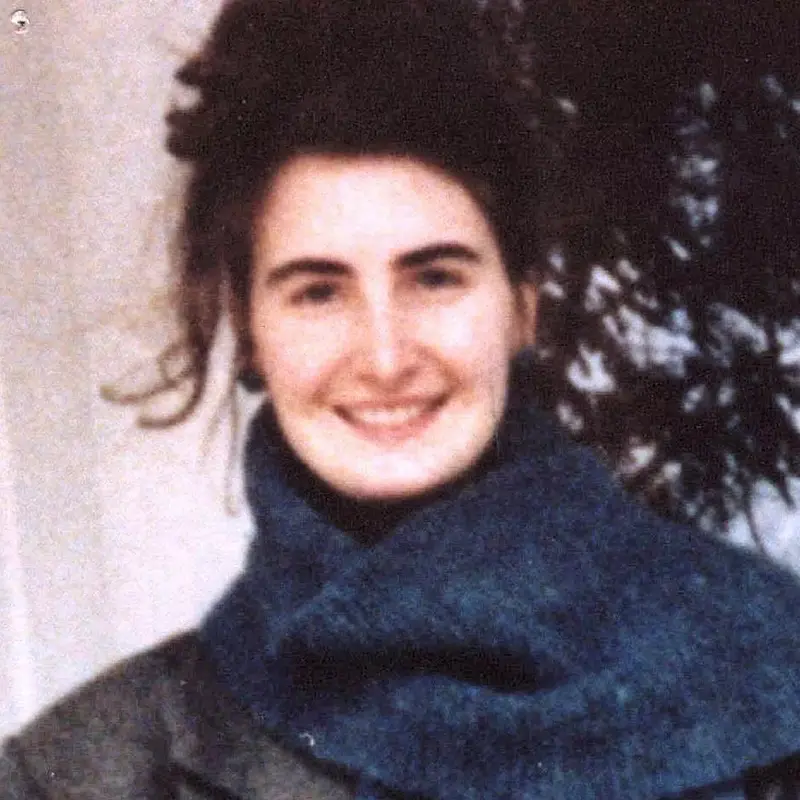
A Man Who Killed Once Already: The Murder of Lori Ann Slesinski
Lori Ann Slesinski was twenty four years old in June 2006, living in a mobile home at the Ridgewood Village Trailer Park near Auburn University in Auburn, Alabama. Originally from New York, Lori had relocated to rural Alabama with her family at age thirteen and went on to graduate from Auburn with honors in psychology, later taking a job at a local mental health facility. She stood five foot seven, weighed a hundred sixty pounds, with blonde hair, blue eyes, and pierced ears. Friends who knew her described her as warm, friendly, and outgoing, a woman who had built a genuine life for herself in the college town she had come to call home.
On June 10, 2006, Lori told her best friend, Lindsay Braun, that she planned to make a quick stop at a store before coming over to visit. She never arrived. Her mother reported her missing five days later, on June 15, after going to check on her and discovering that something was seriously wrong inside Lori's home. The front door looked splintered, and there were scuff marks visible on the walls. A phone cord was missing from her bedroom. Kitchen rugs had disappeared entirely. The thermostat had been set unusually low, and an answering machine that should have been running sat unplugged. Lori's dog, however, appeared to have been fed and cared for in the days since she vanished, one of the few details in an otherwise deeply alarming scene that did not immediately point toward violence.
A Car That Exploded on a Back Road
Four days after her mother reported her missing, in the early hours of June 14, 2006, Lori's blue 2005 Mazda Tribute was found engulfed in flames on DeKalb Street, a desolate stretch of road, at 4:41 in the morning. Forensic examiners who processed the burned vehicle found Lori's blood on the door, physical evidence confirming that whatever had happened to her, the car itself had played some direct role in it. Investigators quickly zeroed in on a man who had reportedly been at Lori's home on the day she disappeared, a man with visible scratches on his arms when police first spoke to him, and whose own vehicle contained handcuffs, a knife, and cleaning supplies, an assortment investigators would later describe in far starker terms. Without enough concrete evidence to make an arrest at the time, police were forced to let him go, and within a week he had left the Auburn area entirely.
A Twelve Year Old Who Had Already Killed Once
The man investigators suspected was Derrill Richard Ennis, known as Rick, and his history stretched back long before he ever met Lori Slesinski. In 1993, when Ennis was just twelve years old, he shot and killed his mother, Dolly Flowers, then beat her with a baseball bat, and separately shot and killed his stepfather, Eddie Joe Flowers, with a shotgun, all inside their home in north Montgomery, Alabama. Ennis later told authorities he had killed his mother and stepfather because he did not want to move, and at another point alleged that his mother had sexually abused him, a claim investigators were never able to independently corroborate. Because he was only twelve at the time of the killings, Alabama law limited his sentence to juvenile detention, and Ennis served nine years before being released at twenty one, walking free with a childhood double murder already behind him and, in the eyes of the legal system, no ongoing supervision or restriction tied to it.
Thirteen years after that release, Rick Ennis became the prime suspect in Lori Slesinski's disappearance, though for more than a decade, prosecutors lacked the physical evidence needed to actually charge him.
DNA That Sat Untested for a Decade
The case finally broke open in 2016, ten years after Lori vanished, when Alabama State Bureau of Investigation Agent Mark Whitaker reopened the long dormant file. Digging back through the evidence collected in 2006, Whitaker discovered that critical DNA samples had been gathered at the time but never actually tested, a gap that had left the case effectively frozen for a decade despite investigators having the physical material necessary to potentially crack it wide open. When that evidence was finally processed, it told an unambiguous story. Ennis's DNA turned up in semen found on Lori's bedsheets, in blood recovered from her interior door, and on the missing kitchen rugs. A hand rolled cigarette butt found near her burned car also carried his DNA. Investigators located and arrested Ennis in Virginia in 2018, where he had been living under an engagement to a school librarian, entirely removed from the life he had left behind in Alabama.
A Trial Sixteen Years in the Making
Ennis's trial finally took place in 2022, sixteen years after Lori disappeared. Prosecutor Jessica Ventiere laid out a case built around scuff marks in Lori's bedroom consistent with a violent struggle, the DNA evidence tying Ennis directly to the crime scene, testimony indicating Lori had rejected his romantic advances, and a witness who recalled Ennis making a chilling comment about having had to strangle a woman. Prosecutors argued the missing phone cord had likely been used to restrain Lori during the attack. The defense, led by attorney William Whatley, argued that the cigarette evidence had been planted and floated an alternative theory suggesting Lori had orchestrated her own disappearance in connection with drug dealing, a theory that found no support from anyone who had actually known her.
The jury found Ennis guilty of capital murder. At the request of Lori's mother, Arlene, who wanted to spare her family the prospect of a prolonged appeals process tied to a death sentence, prosecutors agreed to a sentence of life without the possibility of parole rather than pursuing execution, and the court imposed that sentence accordingly.
A Mother's Long Wait for Justice
Arlene Slesinski had endured devastating losses in the years between her daughter's disappearance and Ennis's eventual conviction, losing a son to cancer and her husband to COVID-19 before ever seeing the case against her daughter's killer reach a verdict. When the conviction finally came, she described feeling sheer relief and joy, speaking directly to her late daughter afterward to say that justice had finally come, that they had waited for it for a long time. Agent Mark Whitaker, the investigator who had reopened the case and finally pushed the untested DNA through processing, became a close, ongoing source of support for Arlene throughout the years the case took to resolve, with Arlene later referring to him simply as her hero.
More than sixteen years after Lori Ann Slesinski vanished from her Auburn trailer park home, and nearly thirty years after Rick Ennis first killed as a twelve year old boy, Lori's body has never been found. Her case stands now as both a resolved homicide, with a convicted killer serving life without parole, and an unfinished one, a family with a verdict but still no place to bring their daughter home to.
Sources
- The Charley Project: Lori Ann Slesinski
- CBS News: Lori Ann Slesinski murder, Disappearance of Alabama college grad tied to Rick Ennis, man who killed parents as a boy
- CBS News: Rick Ennis murdered his parents when he was 12 years old. A decade later, did he kill again?
- Law & Crime: Derrill Richard Ennis Guilty in Murder of Lori Ann Slesinski
- WTVM: Jury finds suspect guilty in 2006 murder of Lori Slesinski
- WTVM: Mother of Lori Slesinski speaks out after sentencing is decided