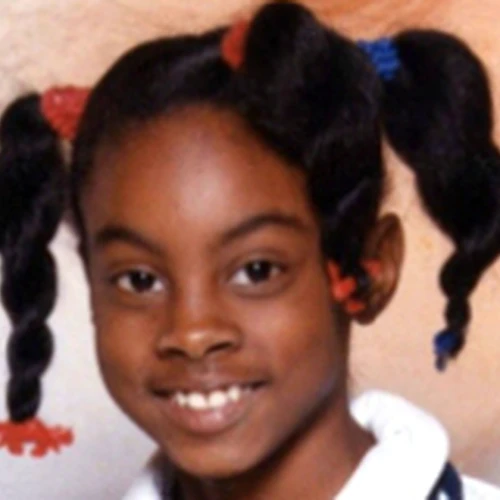
The Landlord Who Became a Rockefeller: Linda Sohus
Linda Sohus was twenty eight years old, red haired, tall at six feet, working at a science fiction bookstore and creating fantasy artwork under the pseudonym Cody, active enough in fandom circles that her sister remembered her carrying a portfolio of her own work everywhere she went, proud of it in the specific way young artists often are. She and her husband, John Sohus, lived in the guest quarters attached to his adoptive mother's home on Lorain Road in San Marino, California, a quiet, affluent suburb near Pasadena. On February 8, 1985, the couple told relatives they were heading to Connecticut, and later New York, for a new job opportunity. They did not return. Linda's family did not file a formal missing persons report until April 8, two months later, once a kennel contacted her sister trying to locate the owner of animals left in its care.
A Story That Never Quite Added Up
Linda's mother, Susan Mayfield, and her sister, Kathleen Jacoby, both testified years later that nothing about the couple's departure matched who Linda actually was. Linda had five cats she treated like family and would never have simply abandoned. She had recently gotten a new white pickup truck and had specifically asked her mother if she could leave it parked at her house during the supposed trip, a request her mother, for reasons she could not fully explain afterward, declined. Linda's portfolio of artwork and other personal belongings were left behind at her family's home as well, small but telling signs of a departure that did not look like the kind of clean, planned relocation the couple had described.
Roughly two months after they vanished, a postcard arrived at Didi Sohus's house, John's adoptive mother, postmarked from France and apparently written by Linda and John. Susan Mayfield found the postcard deeply puzzling. Linda had never expressed any interest in traveling to Europe, did not have the money for international travel, and, as far as her family knew, did not even possess a passport. The postcard read, to her family, less like reassurance than like a deliberate attempt to manufacture distance and plausibility around a couple who had, by that point, already been gone far longer than any short job relocation should have required.
The Man in the Guest House
At the time John and Linda moved into the guest house on the property, they found it was not actually empty. A young man renting the space under the name Christopher Chichester had gotten there first, and the newlyweds' arrival created friction, since Chichester now found himself sharing space he had apparently expected to have to himself. Prosecutors later argued this tension carried real weight, noting that with John and Linda out of the way entirely, Chichester would have been left effectively alone in the household with Didi Sohus, an elderly woman prosecutors described as vulnerable, giving him considerably more access and control over the property and the family's affairs than two live in newlyweds would ever have allowed.
Christopher Chichester was not, in fact, Christopher Chichester at all. He was Christian Karl Gerhartsreiter, a German national who had arrived in Connecticut at sixteen years old in 1979 as a foreign exchange student and who spent the following decades constructing an extraordinary sequence of false identities across the country. In Wisconsin, where he attended the University of Wisconsin-Stevens Point, he went by Christian Gerhart. On the West Coast, while attending USC's film school, he was Christopher Chichester, claiming at various points to be the thirteenth Baronet of Chichester, an entirely fabricated British aristocratic title. Later, back in Connecticut, he reinvented himself again as a hedge fund manager named Chris Crowe. Eventually, in New York, he adopted the identity that would make him internationally notorious, presenting himself as Clark Rockefeller, a supposed member of the famous Rockefeller banking family, a persona sophisticated enough that he moved through elite social and financial circles in Boston and New York for years without anyone seriously questioning his claimed lineage.
Nine Years Underground
In May 1994, construction workers doing pool work on the Sohus family's former San Marino property uncovered human remains buried in the yard. The skeleton showed clear evidence of blunt force trauma to the head, along with signs of stabbing, and the skull had been wrapped in two plastic bags, secured around the neck with telephone wire. It would take until 2008, fourteen years after the discovery and twenty three years after the couple disappeared, for DNA testing to formally confirm the remains belonged to John Sohus. Linda's remains have never been found anywhere.
The forensic detail that ultimately proved decisive at trial involved those same two plastic bags used to wrap the skull. One bag came from a bookstore at the University of Wisconsin Milwaukee. The other came from the USC bookstore. Investigators determined that exactly one person connected to the household at 1920 Lorain Road had ever attended both of those specific institutions, the same young man who had been renting the guest house under a fake British aristocratic identity at the time the couple vanished.
Caught as a Rockefeller
Gerhartsreiter's elaborate reinvention as Clark Rockefeller finally collapsed in 2008, not because investigators connected him to a decades old California murder, but because he kidnapped his own daughter during a custody dispute in Boston, a crime that triggered a manhunt and a wave of media coverage exposing the full scope of his fabricated identity to the public for the first time. Once his true background as Christian Gerhartsreiter came to light, investigators working the long dormant Sohus case were finally able to connect the dots between the vanished San Marino guest house tenant and the man who had spent years fooling Boston's social elite as a Rockefeller.
In 2011, twenty six years after John and Linda disappeared, Gerhartsreiter was formally charged with John Sohus's murder. He went to trial in early 2013, and the defense offered an alternative theory to explain the entire case, arguing that Linda had actually killed her own husband and then fled to Paris herself, sending the mysterious postcard to Didi Sohus as part of covering her escape. Prosecutors dismissed this theory as nonsensical, pointing to Linda's own well documented, gentle temperament and complete lack of any prior conflict with John, along with the practical impossibility of the specific bookstore bags connecting back to anyone but Gerhartsreiter himself. In April 2013, a jury convicted Christian Gerhartsreiter of first degree murder in John Sohus's death. He was sentenced to a minimum of twenty seven years in state prison.
A Second Victim the Law Never Reached
Prosecutors have stated plainly that they believe Gerhartsreiter killed Linda as well as John, given the couple's simultaneous disappearance and the implausibility of any scenario in which one survived independently of the other. He has never been formally charged in connection with Linda's death specifically, a direct consequence of the fact that her body has never been recovered, leaving prosecutors without the physical evidence needed to bring a second murder case even against a man already convicted of killing her husband. Linda's sister, Kathleen Jacoby, spoke afterward about the frustration of that outcome, saying she had hoped for murder convictions covering both of the people who disappeared from that property in 1985, not just one of them.
Still Missing
Linda Sohus has never been found. Christian Gerhartsreiter remains in California state prison, having been convicted for one of the two murders investigators believe he committed on the same property, in the same period, against the same young couple who had simply moved into a guest house he did not want to share. His case, with its layered false identities stretching from a fabricated British baronetcy to an invented place in one of America's most recognizable family names, has been the subject of extensive true crime coverage in the years since, though virtually all of that attention has centered on the elaborate deception of Clark Rockefeller rather than on Linda herself, the young artist with five cats and a portfolio of fantasy paintings who has spent four decades now simply gone, unrecovered, and legally unresolved.
Sources
- The Charley Project: Linda Sohus
- Boston.com: Mother, sister tell of mysterious disappearance of Linda Sohus, during 'Clark Rockefeller' murder trial
- Oxygen: What Happened To John and Linda Sohus?
- ABC News: Clark Rockefeller Impostor Case, Closing Arguments Underway in Murder Trial