The Disappearance of Kathleen Durst: Forty Years in the Shadow of Robert Durst
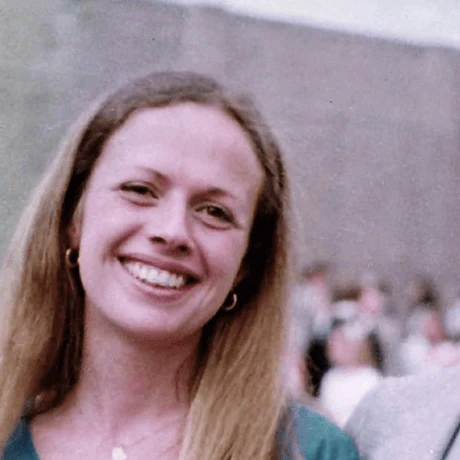
Kathleen McCormack grew up on Long Island, the youngest of five children in a family that had none of the money her future husband's family had. Her father worked for the phone company and died when she was young. She trained as a dental hygienist, then decided that was not enough, and enrolled in nursing school, and then decided that was not enough either, and by the winter of 1982 she was three months from graduating from the Albert Einstein College of Medicine, on track to become a pediatrician. Friends who knew her in those years describe someone who was quietly rebuilding herself, gaining confidence, moving toward a life that was entirely her own. On January 31, 1982, she disappeared, and the man she had been trying to build that life apart from spent the next four decades as the only real suspect anyone ever had.
That man was Robert Durst, heir to one of the largest real estate fortunes in New York City. Kathie met him around 1971, when she was living in a building his family owned on Manhattan's East Side. The attraction, by her sister's account, was immediate and mutual. They married in April 1972, not long after Robert's father pushed him to come back from Vermont, where the couple had been running a small health food store, and take up his place in the family business. It was, from the outside, an enormous step up for a telephone worker's daughter. It did not turn out that way.
A Marriage Coming Apart
By the late 1970s and into 1982, the people around Kathie were hearing things that alarmed them. Friends said Robert had pressured her into an abortion. She had begun asking for a divorce and reportedly wanted a $250,000 settlement, a request Robert answered by cutting off her credit card, removing her from their joint bank account, and refusing to keep paying her medical school tuition. Three weeks before she disappeared, Kathie went to a hospital for facial bruising and told a friend that Robert had hit her. She told more than one person around this time that she was afraid of him.
On the night of January 31, she went to a dinner party at the Connecticut home of her friend Gilberte Najamy. Robert called partway through the evening, and the two of them argued on the phone. Kathie seemed shaken afterward. She told Najamy, before leaving, to look into things if anything ever happened to her. It is hard to read that request now as anything other than exactly what it sounds like. She then drove back to the small cottage she and Robert kept in South Salem, New York, to meet him. She was never seen again by anyone outside their household.
A Story That Kept Changing
What Robert said happened that night shifted more than once over the years, which was itself one of the more telling features of the case. His first version was that he drove Kathie to the Katonah train station so she could catch a train back to Manhattan, after the two of them shared most of a bottle of wine. Later, he offered a different account, saying he had actually spoken to her by phone that night while he was out walking the family dog, from a pay phone roughly three miles from the cottage, during a snowstorm. He eventually admitted the train story was false. His explanation for lying was almost disarmingly simple: he said he thought it would make the whole situation go away.
A doorman at the Manhattan apartment building told police he had seen a woman who might have been Kathie there the next day, February 1, though he only saw her from behind and could not be sure. Robert did not report her missing until several days later, after she failed to show up at a hospital where she had a work shift. When the building superintendent looked into the trash compactor not long afterward, he found some of Kathie's belongings inside it. When Najamy eventually got into the South Salem cottage herself, she found unopened mail thrown in the garbage, the clothes Kathie had reportedly worn that night still hanging in the closet, and trash bags stuffed into a floor to ceiling closet space. None of it added up to proof of anything in a court of law, but it did not need to for people who knew the couple to draw their own conclusions.
Decades of Almost Nothing
For most of the 1980s and 1990s, the case sat essentially frozen. Police in 1982 had leaned toward the theory that Kathie had simply walked away from a bad marriage, an explanation that fit the culture of the time more comfortably than it fit the facts. Robert divorced her in absentia in 1990, citing abandonment. It was not until 1999 that New York State Police, acting on a tip, quietly reopened the investigation, a fact that did not become public until late 2000. Investigators searched the South Salem property and found a hidden compartment behind a wood panel. It was empty.
What changed the entire shape of the case was not anything found in South Salem. It was what started happening to the people around Robert Durst.
In December 2000, Robert's close friend Susan Berman was shot once in the back of the head in her home in Los Angeles. Berman had known both Kathie and Robert for years and had, by multiple accounts, served as his unofficial spokesperson during the original 1982 investigation, fielding reporters' questions on his behalf. Shortly before her death, Robert had given her fifty thousand dollars. After she was killed, an anonymous letter arrived at the Beverly Hills police department, addressed in block letters, giving her address and containing a single word: cadaver. The word "Beverly" in the address was misspelled as "Beverley." Then, in October 2001, the dismembered remains of an elderly man named Morris Black turned up floating in Galveston Bay, Texas. Robert had been living across the hall from Black under a false identity, disguised at times as a mute woman. He was arrested, released on bail, skipped a court date, and was eventually caught shoplifting a chicken sandwich at a Pennsylvania supermarket while carrying five hundred dollars in cash. At his 2003 murder trial, Robert admitted under oath to dismembering Black's body with a paring knife, two saws, and an axe, but argued the shooting itself was self-defense during a struggle over a gun. Without Black's head, which was never found, prosecutors could not contradict him. A jury acquitted him of murder in November 2003.
The Confession Nobody Was Supposed to Hear
The case might have stayed there permanently if not for a documentary. In 2015, HBO aired Andrew Jarecki's six-part series The Jinx, built around a lengthy series of interviews Robert had agreed to sit for. During production, the filmmakers obtained an old letter Robert had written years earlier and noticed it contained the exact same misspelling of "Beverley" that had appeared in the anonymous cadaver note sent after Berman's murder. In the documentary's final episode, Robert, apparently still wearing a microphone during a bathroom break, was recorded muttering to himself: "What the hell did I do? Killed them all, of course." He was arrested at a New Orleans hotel the night before the finale aired, found with a loaded revolver, marijuana, a latex mask, his passport, and over forty thousand dollars in cash.
Robert was ultimately tried and convicted of first-degree murder for killing Susan Berman, a verdict reached in September 2021. Weeks before that conviction, prosecutors in New York had already announced they were reclassifying Kathie's disappearance as a homicide, and in October 2021 a Westchester County grand jury indicted Robert for her murder as well. He never stood trial for it. He died of cardiac arrest in January 2022, at seventy-eight years old, in custody in California, with the Kathie Durst case still pending against him. Because his appeal on the Berman conviction was unresolved at the time of his death, that conviction was automatically vacated too. Legally, he died having been definitively convicted of nothing.
What Was Left Behind
Kathie was declared legally dead in 2017, thirty-five years after she vanished, and her small estate, about $130,000, was split between Robert and her mother. Her brother, Jim McCormack, spent decades keeping her case in front of reporters, insisting she not be reduced to a footnote in her husband's story. In 2022, the Westchester County District Attorney released a lengthy public report laying out the full case against Robert in detail neither an indictment nor a trial ever could, a document meant to stand in for the courtroom reckoning that never happened.
No one was ever convicted of killing Kathleen Durst. No trial ever tested the evidence against a jury. What exists instead is a prosecutor's report, a mountain of circumstantial detail collected across forty years, and the fact that the one person investigators believed could answer for it is no longer alive to be asked. Kathie McCormack wanted to become a pediatrician. She wanted out of her marriage. She asked a friend, hours before she disappeared, to look into things if anything happened to her. Something did.
Sources
- The Charley Project — Kathleen Durst
- Wikipedia — Robert Durst
- Westchester County DA — Report of the Investigation into the 1982 Murder of Kathleen Durst
- PBS NewsHour — Robert Durst charged with 1982 murder of wife Kathie Durst
- NBC News Dateline — Thirty-six years after her disappearance, Kathie Durst's family continues to fight for justice
- ABC News — Kathleen Durst's family questions why murder charge took 39 years
- All That's Interesting — Inside The Chilling Disappearance Of Kathleen McCormack, Wife Of 'The Jinx' Murderer Robert Durst