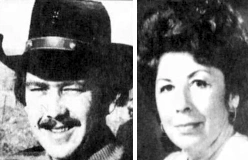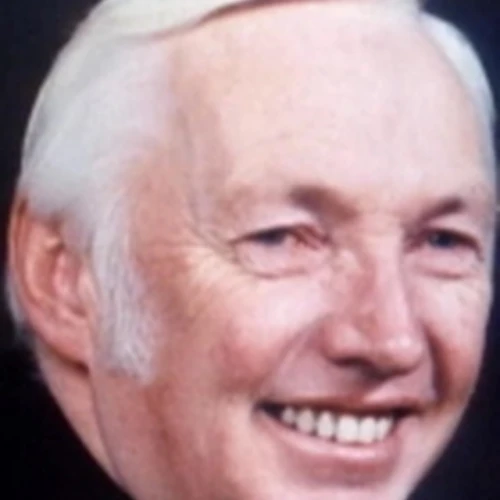
A Priest, a Bakery, and a Bloody Shovel: John Patrick Kerrigan
Father John Patrick Kerrigan was born January 10, 1926, in Butte, Montana, and went on to attend St. Joseph Grade School, Central High School, and eventually St. Edward's Seminary in Seattle before his ordination as a Franciscan priest in 1954. What followed was an unusually long and unusually transient thirty year career, one that saw Kerrigan cycle through thirteen different parish assignments scattered across rural Montana, a pace of relocation that struck investigators decades later as noteworthy in its own right, long before anyone understood the full reason behind it. In July 1984, at fifty eight years old, Kerrigan arrived at his thirteenth and final posting, Sacred Heart Church in the small town of Ronan, Montana. He would be gone within two days of arriving, and he has never been found since.
Two Days Into a New Assignment
Kerrigan reached Ronan and settled into the rectory at Sacred Heart, preparing for what should have been an unremarkable transition into yet another rural Montana parish. On the evening of July 20, 1984, he went out for a jog, a routine bit of exercise that took him past a local gathering spot called Deneault's Bakery on 4th Avenue southwest. Around 11 p.m., he stopped in, greeting a late night crowd of locals who had gathered there, dressed in red shorts, a white T-shirt, and tennis shoes. He mentioned to the group that he was planning to attend both a funeral and a wedding the following day in the nearby town of Plains. He never returned to the rectory that night, and he never gave the sermon he had been scheduled to deliver at his very first Mass in his new parish.
When Kerrigan failed to appear for the 5:30 p.m. Mass on July 21, and then again failed to show for Sunday services, the alarm among parishioners who had barely had the chance to meet their new priest grew quickly. He was officially declared missing on July 23, 1984, just three days after he was last seen walking into a small town bakery in workout clothes.
Blood on the Highway, Blood in the Trunk
The physical evidence that emerged over the following week painted an unmistakably violent picture. Bloody clothing, including a shirt, shoes, and windbreaker, was discovered stacked alongside Montana Highway 35, roughly five miles northeast of Polson, not far from Flathead Lake. Hair recovered from the clothing was later matched to Kerrigan. Tucked into the pockets of the abandoned clothes were a hundred dollar bill and a wallet containing roughly two hundred dollars, a detail that immediately undercut any theory involving simple robbery, since whoever had done this had left behind a meaningful amount of cash rather than take it.
About a week after Kerrigan vanished, his brown Chevrolet Impala turned up on Skyline Drive in Polson, seven miles from where the bloody clothing had been found. The vehicle had been deliberately wiped clean of fingerprints, yet it was anything but empty of evidence. Blood spatter covered the front seat, the passenger door, and the floorboard. In the trunk, investigators found a wallet containing over a thousand dollars in cash, along with a blood soaked pillow and a shovel, also stained with blood. The car's keys were eventually located discarded in nearby weeds. Near the bloody clothing on the highway, investigators also recovered a wire coat hanger stained with blood, an object with no obvious innocent purpose at a crime scene otherwise built entirely around a missing man's car and clothes.
A Case That Refused to Move
Lake County's chief investigator, Paul Choma, ran into a wall of institutional reluctance almost immediately, later describing how difficult it was to get church officials and others connected to the case to actually provide useful information as the investigation unfolded. By the summer of 1985, a new Lake County Sheriff, Joe Geldrich, publicly stated that investigators had identified a suspect who was not currently in Montana, and characterized the case as looking very good for eventual resolution. That optimism, whatever specifically prompted it, never translated into an arrest, a charge, or any further public update. The case simply stalled, and it has remained stalled ever since.
Investigators considered and ultimately eliminated several alternative explanations along the way. Four prisoners who had escaped from the Swan River Youth Camp around the same time were all recaptured within a week, with nothing tying any of them to Kerrigan specifically. Reed Nevins, a man who murdered a woman in Polson just two days after Kerrigan disappeared and who had reportedly been in Ronan the same night Kerrigan vanished, was looked at closely but never connected to the priest's disappearance through any actual evidence.
An Eerie Twin Case in New Mexico
Two years before Kerrigan vanished, in August 1982, a Franciscan priest named Father Reynaldo Rivera was murdered near Santa Fe, New Mexico, lured out of his own rectory by a phone call falsely claiming an elderly parishioner needed last rites before dying. He was later found shot and strangled with wire near the town of Waldo. The parallels between Rivera's murder and Kerrigan's disappearance struck several investigators as too specific to dismiss outright. Both men were Franciscan priests in their late fifties. Both drove brown Chevrolets that were found abandoned and wiped down afterward. Both cases involved wire, a coat hanger in Kerrigan's case and actual strangulation wire in Rivera's. Both bodies or evidence turned up along roads well outside the towns where the men had last been seen, and both incidents occurred during the same narrow summer window near the start of August.
Santa Fe's deputy police chief, Gilbert Ulibarri, became convinced the two cases were connected, theorizing that a single drifter with what he described as a specific psychological fixation on priests was responsible for both crimes. Not everyone agreed. A state police detective named Eric Lucero pushed back directly against that theory years later, in 1992, stating flatly that there was no connection whatsoever between the two cases. Adding a layer of relevance investigators could not ignore, Kerrigan himself had actually spent time in New Mexico in the early 1980s, at a facility called the Congregation of the Servants of the Paraclete in Jemez Springs, a rehabilitation center intended for clergy dealing with alcoholism, depression, or sexual misconduct, giving him a direct, if unrelated on its surface, geographic tie to the region where Rivera had been killed.
Other Montana Men Who Vanished the Same Summer
Kerrigan's case sits within an unusually dense cluster of Montana disappearances from roughly the same period, none of which have ever been conclusively tied to one another. Reverend James Otis Anderson disappeared from Townsend, Montana in 1982; his Volkswagen was not located until 1992, ten years later, without ever producing a clear connection to Kerrigan's case. Curtis Holmen, a schoolteacher, went missing from Missoula on July 22, 1984, just two days after Kerrigan vanished from Ronan, with his truck found abandoned twelve days afterward. Authorities leaned toward suicide as the explanation in Holmen's case, though his own brother later speculated publicly about a possible link to Kerrigan's disappearance, a connection that has never been substantiated by any actual evidence.
A Reputation That Complicated Everything
The investigation into Kerrigan's disappearance carried an extra layer of complexity that would not become fully public for another three decades. In April 2015, the Roman Catholic Diocese of Helena settled a civil lawsuit and, as part of that settlement, disclosed a list of roughly eighty church employees, mostly priests and nuns, who had allegedly sexually abused children across western Montana over the years. Kerrigan's name appeared among them, tied to abuse allegations dating back across the 1940s through the 1970s. Former Sheriff Geldrich later confirmed that investigators had actually been aware of these allegations even during the original 1984 investigation, though he maintained that revenge tied to the abuse seemed like an unlikely motive for whatever happened to Kerrigan. It remains unclear whether Kerrigan's repeated relocations across thirteen different parishes over thirty years, including his stay at the New Mexico rehabilitation facility, were connected to these allegations, though the pattern reads, in hindsight, very much like a diocese quietly moving a problem priest from town to town rather than confronting it directly. No charges were ever filed against Kerrigan himself in connection with the abuse allegations, both because the alleged perpetrators in some incidents had already died and because statutes of limitations had long since expired by the time the allegations became public.
A Staged Disappearance, or Something Darker
Not every theory about Kerrigan's case assumes he was murdered at all. Author Brian D'Ambrosio has proposed an alternative reading of the evidence entirely, suggesting Kerrigan may have staged his own disappearance, potentially with quiet assistance from within the diocese itself, perhaps as a way of escaping both his current post and the abuse allegations that would eventually surface publicly decades later. That theory has never been proven any more conclusively than the homicide theory that investigators originally pursued, and it does not obviously account for the blood evidence recovered from his car and clothing, though the specific blood typing details available in public reporting have left the theory technically unrefuted despite its improbability.
Unsolved, Unresolved, and Largely Unremembered
Father John Kerrigan's case was profiled nationally on Unsolved Mysteries on November 23, 1988, four years after his disappearance, bringing his story to a wide television audience during an era when the show was actively helping crack open several long stalled cold cases across the country. That exposure did not produce a break in Kerrigan's case. The Lake County Sheriff's Office has continued to list the case as officially open, but it exists today largely without any public advocate or surviving family member actively pushing for continued attention, a quiet contrast to many other cold cases that persist in public memory specifically because a determined relative keeps them there. What remains is a set of physical facts that has never fully cohered into an answer, a bloody shovel and pillow in the trunk of a wiped down car, clothing and a blood streaked coat hanger left along a rural Montana highway, an uncannily similar unsolved priest murder two years earlier in New Mexico, and a man whose own hidden history, once it finally came to light decades later, complicated any simple reading of who Father Kerrigan actually was in the two days before he vanished for good.
Sources
- The Charley Project: John Patrick Kerrigan
- Flathead Beacon: The Vanishing of a Priest
- Wikipedia: 1980s Franciscan priest murders
- Unsolved Mysteries Wiki: Father John Kerrigan
- Good As Gone: The Disappearance of Father John Patrick Kerrigan