Three Weeks of Silence: The Murder of Jhessye Shockley
Jhessye Jashua Shockley was five years old when her mother, Jerice Yaton Hunter, reported her missing from their apartment near Glendale and 43rd Avenues in Glendale, Arizona, on October 11, 2011. According to Hunter's account, Jhessye had simply wandered away from the apartment after the front door was left open, and a witness reportedly saw a woman placing a young girl matching Jhessye's description into a black sedan nearby. Investigators would eventually determine that almost none of this story was true, and that Jhessye had likely already been dead for weeks by the time her mother ever reported her missing at all.
A Story That Didn't Hold Up
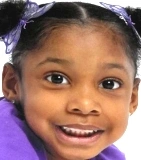
Jhessye was described by those who knew her before this final period as a small, bright eyed child, standing just three and a half feet tall and weighing about 55 pounds, with black hair and brown eyes. She was last known to have been wearing a white t-shirt, blue denim shorts, and pink flip-flops, an outfit that circulated widely in the days after her disappearance became public, alongside her mother's claim that Jhessye had simply wandered off after a door was left unlocked. Jhessye had last attended school on September 22, nearly three weeks before her mother finally reported her disappearance. That gap alone raised significant questions once investigators began examining the timeline closely, since it meant that if Hunter's account were true, no one outside the household had actually seen Jhessye alive in the better part of a month.
Siblings Who Knew the Truth
The real account of what had happened to Jhessye came from her own siblings, two of whom were placed in foster care and eventually disclosed a pattern of severe abuse to their guardians and to investigators. According to their testimony, Hunter had once discovered Jhessye watching television with a neighborhood boy and, reacting with anger, dragged her into a bedroom while her sister listened to her screaming and crying from another room. Following that incident, Hunter confined Jhessye to a closet, and her older sister described having to sneak her water while their mother was out of the apartment, simply to keep Jhessye from becoming dehydrated, before quickly returning her to the closet ahead of their mother's return to avoid triggering further punishment. The same sister told investigators that Jhessye's face and body showed visible bruises and cuts during this period, that her eyes had become swollen nearly shut, and that she had come to resemble what her thirteen year old sibling described only as a zombie. The closet itself, according to this testimony, had developed a smell the sister could only describe as resembling death.
Bleach Purchased Two Days Before the Report
On October 9, 2011, two days before Hunter ever reported Jhessye missing, she purchased a bottle of bleach at a nearby Walgreens. According to her own daughter's later testimony, Hunter used that bleach to clean the entire apartment, specifically scrubbing down shoes that had been stored inside the same closet where Jhessye had been kept.
A Contradicted Alibi
Hunter's account of Jhessye's disappearance depended on the claim that older children in the household had been supervising her at the time she wandered off. The two siblings who eventually came forward directly contradicted this claim, telling investigators that Jhessye had not actually been present in the apartment, alive and able to wander anywhere, for a significant period before the day Hunter finally called police.
A Massive Search That Found Nothing
Once Jhessye's disappearance became public, investigators launched an extensive search effort, including a targeted search of a Phoenix area landfill in 2011. That search proved enormous in scope, with more than 300 officers sifting through roughly 9,500 tons of garbage over a period of three months, an effort that ultimately failed to recover any trace of Jhessye at all. Investigators eventually came to believe Jhessye's body had been discarded in a trash bin in nearby Tempe, though her remains were never located despite this exhaustive search.
Charges Without a Body
Prosecutors ultimately charged Jerice Hunter with first degree murder and child abuse, building a case that would have to proceed to trial entirely without recovered remains, an unusual but not unprecedented circumstance in Arizona homicide prosecutions. Investigators supported their case with cadaver dog evidence, with members of the Maricopa County Sheriff's Office Search and Rescue Posse testifying that a specially trained K9 had detected the scent of human decomposition inside Hunter's own apartment, alongside blood evidence, documented witness statements, and, most significantly, the direct testimony of Jhessye's own siblings describing the pattern of abuse and confinement that had preceded her death.
A Twenty Day Trial
Jerice Hunter's trial began on March 2, 2015, and stretched across 20 days of testimony and proceedings. After four days of deliberation, the jury found Hunter guilty on both counts, first degree murder and child abuse.
Sentencing
Hunter was sentenced to natural life in prison for the murder conviction, along with a consecutive 20 year term for the child abuse charge, a combined sentence ensuring she would spend the remainder of her life incarcerated regardless of any future parole consideration connected to either individual charge.
Appeals That Failed
Hunter pursued post-conviction relief in the years following her sentencing, but on July 25, 2018, the Arizona Supreme Court declined to hear her appeal, denying her amended petition without providing additional explanation for the decision. That denial left her original 2015 conviction and sentence fully intact, closing off what had been her most significant remaining legal avenue for challenging the verdict.
A Mother Who Maintains Innocence
Despite the jury's verdict and the exhaustive appeals process that followed, Jerice Hunter has continued to maintain her innocence in the years since her conviction, a position she has held even as her own children's testimony, the physical evidence recovered from her apartment, and the timeline investigators pieced together all pointed toward the same conclusion a jury ultimately reached.
Still Missing
More than a decade after Jhessye Jashua Shockley's mother reported her missing with a story investigators would come to believe was largely fabricated, her remains have never been found, lost somewhere within the tons of waste searched across three exhausting months in 2011. Her case stands as a stark example of a child whose absence from public life, from school, from anyone outside her own household, stretched on for weeks before anyone outside her family ever knew something was wrong, and whose own siblings ultimately provided the testimony that brought the only accountability her case would ever produce.
Sources
- The Charley Project: Jhessye Jash'ua Shockley
- CBS News: Jerice Hunter, Arizona mother, convicted of murdering missing daughter Jhessye Shockley
- Maricopa County Attorney's Office: Jerice Hunter Sentenced to Natural Life for Murdering Her Daughter
- Phoenix New Times: Jerice Hunter Told Other Children to Lie About Jhessye Shockley Disappearance, Kept 5-Year-Old in Closet Before Reporting Her Missing
- FOX 10 Phoenix: Jerice Hunter case, Arizona Supreme Court won't hear appeal of convicted mother
- FOX 10 Phoenix: Jerice Hunter murder trial, key evidence presented in court
- 12news.com: What happened to Jhessye Shockley's body?
- Glendale Star: Hunter sentenced to life in prison for murder of daughter