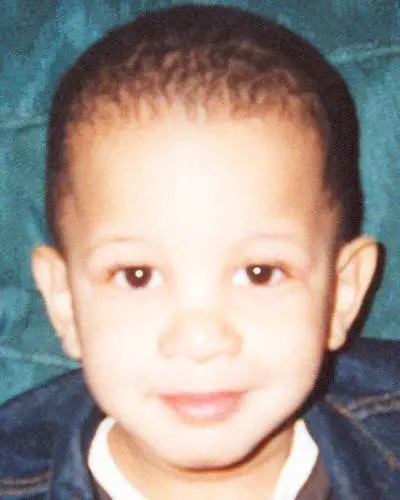
The Disappearance of Jahi Marques Turner: A Park, a Vending Machine, and a Story That Never Added Up
On the afternoon of April 25, 2002, a man called 911 from a park in the Golden Hill neighborhood of San Diego, California, and reported that his two-year-old stepson had vanished. He said he had only left the boy near the sandbox for a few minutes, just long enough to walk to a vending machine and buy him a drink, and that when he returned, the child was gone. The call was frantic. The description of the boy's clothing came out in a rush. And investigators who responded to that scene almost immediately felt that something about what they were being told did not hold together.
Jahi Marques Turner was two years old. He was born on February 10, 2000, a small boy with black hair and brown eyes, a light complexion marked by eczema in the creases of his skin, and a scar over one knee. He was wearing a long-sleeved navy blue shirt printed with images of Winnie the Pooh and Tigger, blue nylon cargo pants with an orange drawstring, and gray Air Jordan sneakers. He has never been found. His case remains one of San Diego's most heartbreaking unsolved mysteries, and the man who was with him that day, his stepfather Tieray Dewayne Jones, has since walked free after a mistrial, his murder charge ultimately dismissed. Jahi has been gone for over two decades, and his mother is still waiting for answers.
A New City, a Deployment, and Four Days Alone
Jahi's mother, Tameka Jones, was eighteen years old at the time of his disappearance. She was a sailor in the United States Navy, and she had recently been assigned to deploy aboard the USS Rushmore. Jahi had been living with his maternal grandmother in Maryland before Tameka brought him to California, arriving in San Diego's Golden Hill neighborhood on April 21, 2002, just four days before he disappeared. The family was living in military housing in the 3400 block of Beech Street. Tameka left for her deployment the following day. Jahi's biological father, who lived in Frederick, Maryland and had recently been released from prison, had never been part of Jahi's life. That left Tieray Jones, Tameka's husband, as the sole adult responsible for the two-year-old in a city the child had been in for less than a week.
Investigators later pieced together the timeline of those four days, and what they found was deeply unsettling. The last confirmed sighting of Jahi by anyone other than Tieray took place on April 22, just one day after he arrived in San Diego, when a neighbor saw him playing at the playground of their apartment complex. After that, no independent witness placed Jahi alive anywhere. On April 23, Tameka called from her ship at 11:00 a.m. to check on her son. Tieray put Jahi on, and the boy made a few sounds before saying "Bye." Tieray told Tameka that Jahi had wet the bed the night before, and also mentioned that the child had fallen off the bed and hit his head on the dresser, though he described it as a small bump and nothing serious. Those details, which seemed unremarkable in the moment, would take on enormous weight in the years that followed.
That same day, April 23, Tieray wrote in a journal he kept with his wife: "Today for some reason he hasn't been moving or really talking. Jahi is starting to act really funny he won't get up off the floor. He's not walking or talking when I tell him to get his cup he just looks at me." He also wrote that he didn't want Jahi hating him for something he couldn't control. A child abuse specialist who later reviewed these journal entries testified that the symptoms Tieray described were consistent with either a serious head injury or blunt force abdominal trauma, either of which could be fatal without medical treatment.
The Morning Before the 911 Call
On the morning of April 24, multiple neighbors at the apartment complex reported seeing Tieray carrying large trash bags to the dumpster. Some witnesses described as many as three full bags, and at least one reported seeing what appeared to be a duffel bag being taken out before sunrise. When police later asked Tieray about this, he denied taking out any trash that day. By the time Jahi was reported missing the following afternoon, the contents of the dumpster had already been collected and hauled away, putting them permanently beyond the reach of investigators.
No one saw Jahi on April 24. No one saw Jahi on April 25, the day Tieray reported him missing, except for Tieray himself.
When Tieray called 911 at 2:30 p.m. on April 25, he told the operator he and Jahi had gone to a playground in the Golden Hill area, near 28th Street and Cedar Street, about a mile from their apartment. This was the Balboa Park-adjacent area. He said he left Jahi near the sandbox while he walked to a vending machine to get the boy a drink, and that when he returned, the child had disappeared. He told police he then spent fifteen to twenty minutes walking around the park and the surrounding block looking for Jahi before calling for help. Authorities later noted that the vending machine Tieray described walking to was roughly 150 yards from the playground, a distance that, if a two-year-old were left unattended in a sandbox for the time it would take to make that round trip, would almost certainly have been noticed by other park users.
And indeed, investigators tracked down every person who had been in or near that park between noon and 3:00 p.m. on April 25, 2002. Not a single one of them recalled seeing Jahi Turner or Tieray Jones at the playground that day. No one saw a small boy in a Winnie the Pooh shirt playing near the sandbox. Not one witness. Jahi's fingerprints were not found on any piece of playground equipment. A woman who was at the park that day was identified by investigators after Tieray described her in his initial account; she was later found and interviewed, and was cleared as a suspect, but the information she provided concerning Jahi's case was never publicly disclosed. In the end, the park itself offered no evidence that Jahi had ever been there.
Police were also puzzled by the choice of that specific park in the first place. There was a playground directly across the parking lot from the family's apartment complex. Why Tieray would have loaded a two-year-old into a car and driven a mile to a different playground when one was steps from their front door was never satisfactorily explained.
What the Evidence Showed
When detectives returned to the apartment with Tieray on the afternoon of April 25, they began uncovering a picture that grew harder to explain with each discovery. Inside the apartment, investigators found blood on one of Jahi's onesies and on an Elmo blanket recovered from a bed. They also found a pair of Jahi's pajamas in the trunk of Tieray's car, and those too tested positive for the child's blood. Tameka later confirmed there was no reason any of her son's clothing should have been in Tieray's car. In a dumpster near the apartment complex, investigators found some of Jahi's clothing and some of Tameka's clothing mixed together, and Tameka said she and Tieray had never discussed him throwing away any of the child's things. Tameka also later positively identified a pair of Winnie the Pooh overalls and other clothing found near the dumpster as belonging to her son.
The blood findings were complicated by the fact that Tameka testified her son often suffered from nosebleeds, and tests on some of the bloodstains were inconclusive. The defense would later lean heavily on this uncertainty. But the presence of the child's blood on multiple items, the blood found on an Elmo blanket on a bed, on clothing in the laundry basket, and on pajamas locked in the trunk of the stepfather's car, was difficult to dismiss as the product of routine childhood nosebleeds.
Investigators also noted concerning details about Tieray's demeanor and behavior on the day of the 911 call. When he reported Jahi missing, he appeared panicked and spoke rapidly, displaying what was described as a white pasty substance on his tongue and in the corners of his mouth. A blood sample drawn from Tieray tested positive for marijuana, consistent with recent use. Officers also noted he appeared more concerned about a lost bank card and a photograph of Jahi he said had gone missing than he did about the missing child himself. He was on his phone for most of April 25, including during periods when he claimed to have been with Jahi.
Despite all of this, investigators in 2004 announced they did not yet have enough evidence to charge anyone in the case. Jahi remained listed as a missing child. San Diego police and hundreds of volunteers had already spent weeks searching canyons, neighborhoods, and waterways in the area. Authorities took the extraordinary step of sifting through an estimated 5,000 tons of garbage at the Miramar Landfill, raking through it systematically in search of the boy's remains. They found nothing.
Fourteen Years, Then a Charge
The case went quiet for over a decade, though it was never truly closed. Then, in March 2015, investigators made a move that proved significant. They asked Tameka, who had since divorced Tieray, to call him on a recorded line and press him about what had happened to Jahi. During that call, Tieray alluded to Jahi's fate as an "accident." When Tameka pressed him to explain what he meant, he stumbled, stuttered, and backed away from the word. He did not elaborate. The recorded call became part of the evidence file.
In April 2016, fourteen years and nearly one year after that phone call, Tieray Jones was arrested in North Carolina and extradited to San Diego. He was charged with second-degree murder and felony child abuse in connection with Jahi's death. San Diego Police Chief Shelley Zimmerman said at the time that the arrest confirmed the family's worst fear, that Jahi was dead, but expressed hope that justice would follow. Deputy District Attorney Nicole Rooney described the prosecution's approach: it was not one piece of evidence that built the case, she said, but many pieces together.
At the preliminary hearing, prosecutors presented Tieray's journal entries to the court, arguing they demonstrated both his frustration with the bedwetting and his knowledge that the child was in serious medical distress in the days before the 911 call. The judge, citing the many inconsistencies in Tieray's accounts, ordered him to stand trial. Tieray pleaded not guilty.
Trial, Mistrial, and Dismissal
The trial took place in February and March of 2018. From the outset, the prosecution acknowledged openly that without Jahi's body, there was little direct evidence linking Tieray to the child's death. The case rested almost entirely on circumstantial evidence: the journal entries, the bloodstained clothing, the trash bags, the absence of any witnesses placing Jahi at the park, the phone call in which Tieray used the word "accident," and the timeline that placed Jahi's last confirmed sighting two days before the 911 call. Prosecutors argued that Jahi had died on either April 22 or April 23, while Tieray was watching him, and that Tieray had then disposed of the body in trash bags and fabricated the park story to conceal what had happened.
The defense pushed back on every piece of the picture. Defense attorney Courtney Cutter told jurors that police had focused on Tieray as their suspect from the first 911 call and had never seriously considered other possibilities. She argued that Tieray, whatever his flaws, was not a man who would watch a child die and then throw him away. She pointed to the inconclusive blood evidence, the lack of any physical evidence directly connecting Tieray to a murder, and the fact that Tameka herself had initially trusted her husband with her son. Tieray took the stand in his own defense, telling the jury he loved Jahi and would never harm him. He did admit, however, that he had lied to police about how long he had left Jahi alone at the park, and that the actual time he had been away from the boy was longer than he initially claimed.
Partway through the trial, Judge Joan Weber dismissed the felony child abuse charge, citing a lack of substantial physical evidence. The jury then deliberated on the remaining murder charge and the lesser included offense of involuntary manslaughter. They deadlocked. Two jurors voted for second-degree murder. Ten voted for not guilty. On involuntary manslaughter, the split went the other way, ten for guilty and two for not guilty. Judge Weber declared a mistrial on March 16, 2018.
Jahi's mother, Tameka, made an emotional plea via video chat for the judge to grant a retrial. Weber denied the request. She ruled the dismissal was in the interest of justice, noting the weakness of the prosecution's case and concluding that it was unlikely any new witnesses would come forward that could tip the balance. The murder charge against Tieray Jones was dismissed. He walked free.
Prosecutors stated at the time that the case could theoretically be refiled if significant new evidence emerged, specifically, if Jahi's remains were ever found. They have not been.
The Boy Who Has Not Been Found
Jahi Marques Turner was two years old and had been in San Diego for four days when he disappeared. He was wearing a Winnie the Pooh shirt and gray Air Jordan sneakers. He had eczema and a scar on his knee. He said "Bye" to his mother on the phone on April 23, and those are the last words anyone can confirm he spoke. His mother has been waiting for over twenty years to bring him home.
The man who was alone with him in those final days, who wrote in a journal that the boy had stopped moving and talking and wouldn't get up from the floor, who denied taking out trash that multiple neighbors watched him carry to the dumpster, who admitted at trial to lying about how long he left Jahi unattended, has not faced further charges. The park on 28th Street still exists. The vending machine is gone.
Jahi's case remains listed as an open investigation by the FBI San Diego field office and the Indianapolis Metropolitan Police Department's equivalent in California. Anyone with information is urged to contact the FBI San Diego at 858-565-1255, or San Diego police.
Sources
- The Charley Project: Jahi Marques Turner
- Illicit Deeds: What Happened to Jahi Turner Missing from California?
- Investigation Discovery: What Happened to 2-Year-Old Jahi Turner?
- True Crime News: Stepdad Walks Free After Mistrial in 2002 Murder Case of 2-Year-Old Jahi Turner
- True Crime Daily: Stepdad Walks Free After Mistrial in 2002 Murder Case of 2-Year-Old Jahi Turner
- NBC 7 San Diego: No New Trial in 2002 Jahi Turner Murder Case
- Times of San Diego: Mistrial Declared in 16-Year-Old Murder of Toddler Jahi Turner
- ABC7 Los Angeles: Jury Deadlocks in Murder Trial of Stepfather Accused of Killing 2-Year-Old Jahi Turner
- CBS8: Closing Arguments in Trial of Tieray Jones
- 10News San Diego: New Details Revealed in Jahi Turner Case
- The Doe Network: Case File 4559DMCA – Jahi Marques Turner