Buried Near the River, Then Washed Away: The Murder of Franklin Wayne Harrod Jr.
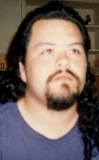
Franklin Wayne Harrod Jr., known to friends and family as Punkie, was twenty four years old in July 1997, living in Rose Hill, Kansas, near Butler County, with his wife, Kelly, and their two young daughters. He worked as a custodian for the Andover school district, stood somewhere between five foot ten and six foot three, weighed between two hundred thirty and two hundred fifty pounds, with black hair worn in a ponytail, a goatee, brown eyes, and a pierced left ear. On July 28, 1997, Franklin disappeared. Kelly told police at the time that he had left the house to buy cigarettes and simply never returned.
That explanation held for a while, treated as a straightforward missing persons case rather than anything more sinister. What investigators eventually uncovered told a very different story, one Kelly herself had set in motion months before Franklin ever vanished.
A Marriage Kelly Wanted to Escape
Kelly described her marriage to Franklin as abusive, and in January 1997, roughly six months before his death, she left him, taking their two daughters with her to Arkansas without telling him where they had gone. Franklin responded by filing for divorce and was granted temporary custody of the children, a legal turn that pushed Kelly to bring the girls back to Kansas and resume living with Franklin rather than lose custody entirely. Living back under the same roof as a husband she had already tried once to escape, Kelly began confiding in a friend, Tamara Ruth Trussell, known as Tammy, about how afraid she was, telling her she believed Franklin would kill her if she ever tried to leave again. According to what investigators later pieced together, Kelly told Tammy she wanted Franklin dead but couldn't do it herself, since she would obviously be the first person suspected. She asked Tammy to do it for her instead.
Tammy brought the request to her own husband, Jerry Wayne Trussell, a friend of Franklin's who jointly owned a car with him. According to the case that eventually came out in court, Jerry told Kelly he would arrange to have Franklin killed in exchange for sexual services from her. When the couple was unable to find anyone else willing to actually carry out the killing, Jerry and Tammy ultimately decided to do it themselves.
A Fight Outside, a Gun From a Truck
On the morning of July 28, 1997, while Kelly was inside the house getting her daughters ready for school, Jerry got into a physical altercation with Franklin outside. According to the account that emerged at trial, Jerry had been sent specifically to distract and provoke Franklin while Tammy positioned herself nearby. During the fight, Tammy ran to a nearby truck, retrieved a gun, and shot Franklin on Jerry's order. Franklin's body was wrapped in a blue tarp afterward and buried near the Walnut River, in an apparent effort to dispose of him somewhere remote enough that he would never be found.
A Case That Sat Unsolved for Years
For years, Franklin's disappearance remained officially unresolved, a missing persons case built on Kelly's original story about cigarettes that nobody had yet been able to disprove. That changed only when investigators finally developed enough information to connect Kelly, Jerry, and Tammy to what had actually happened, leading to arrests in 2005, eight years after Franklin vanished.
Once the case moved to prosecution, all three people involved ultimately faced consequences, though through different legal paths. Kelly pleaded guilty to solicitation of first degree murder and agreed to testify against Jerry, receiving a sentence in the range of thirty to thirty two months in prison, depending on the account, and was discharged from her sentence by 2011. Tammy Trussell, identified by authorities as the one who actually fired the fatal shot, pleaded guilty to voluntary manslaughter and conspiracy, receiving a sentence of roughly eleven years, or about a hundred thirty six months, and was released in March 2017. Jerry Trussell, tried separately, was convicted in 2007 of aiding and abetting murder and conspiracy to commit first degree murder, and received the most severe sentence of the three, a term of twenty five years to life in prison.
A Case Built Without a Body
Franklin's case became a notable example within Kansas legal circles of what prosecutors call a bodyless murder prosecution, a homicide case built and won entirely without ever recovering the victim's remains. Butler County Attorney Jan Satterfield, discussing the difficult decision to move forward without a body, explained that while it was not the preferred course of action, once investigators had exhausted every possible avenue for locating remains and remained confident a murder had actually occurred, prosecutors had to proceed with the evidence and testimony they did have, emphasizing that a killer should not be able to escape justice simply because the physical remains of their victim could not be located.
Investigators believe Franklin's body, buried near the Walnut River shortly after his death, was likely washed away entirely during a significant flood that struck the area in 1998, less than a year after he was killed, an event that would have scattered or destroyed whatever physical evidence remained at the burial site before anyone even knew to look for it. At one point during the investigation, one of the individuals involved in the case reportedly led police to a location where they believed Franklin's body had been buried, and while investigators recovered a blue tarp consistent with the one described in witness accounts, they were unable to locate any remains at the site itself.
Still Searching
Despite the convictions securing some measure of legal accountability, Franklin's family has never had anywhere to lay him to rest. In more recent years, investigators have renewed efforts to locate his remains, reportedly developing new information from one of the individuals convicted in the case pointing toward a possible burial location somewhere in southern Butler County, prompting authorities to resume searching the area and to continue asking the public for any information that might finally help close that last remaining gap in the case. Franklin's mother, Blanca Harrod, has spoken publicly about the toll of not knowing where her son actually rests, saying plainly that there is someone out there who knows where her son is buried, a simple, direct appeal that has outlasted every conviction the case has already produced.
More than a quarter century after Franklin Wayne Harrod Jr. was shot outside his own home while his young daughters got ready for school inside, the three people responsible for his death have all faced consequences in a courtroom, yet the most basic piece of the case, where his body actually is, remains unresolved, left to a river that likely carried it away before anyone even knew to start looking.
Anyone with information about the location of Franklin Wayne Harrod Jr.'s remains is asked to contact the Butler County Sheriff's Office at 316-322-4257.
Sources
- The Charley Project: Franklin Wayne Harrod Jr.
- KAKE: 'Murdered and Missing', '97 Butler Co. case still unsolved, new information revealed
- Monnat & Spurrier: 'Bodyless' Murders Challenge Courts
- The Cinemaholic: Franklin Harrod Jr. Murder, Who Killed Punkie? Where is Kelly Harrod Now?
- FindLaw: State v. Trussell (2009)
- Find A Grave: Franklin Wayne "Punkie" Harrod Jr.