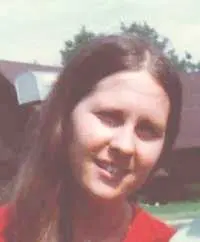
The Vanishing of Dorothy "Dottie" May Caylor
She was a woman fighting her way back to herself. In the early 1980s, Dorothy "Dottie" May Caylor had been slowly retreating from the world, her agoraphobia tightening its grip year by year until her own home became the only place she felt safe. But by 1985, things were changing. She was attending college classes, going to church, joining a support group. She was opening bank accounts in her own name, applying for her own credit cards, renting a P.O. box. She was, by all accounts, preparing to leave her troubled marriage and start fresh. She never got the chance.
On June 12, 1985, Dottie Caylor walked into the Bay Area Rapid Transit station in Pleasant Hill, California, and was never seen again. She was 41 years old.
A Marriage Built on Deception
To understand what happened to Dottie, you have to understand the marriage that preceded her disappearance. Dottie, born Dorothy May Rusnak on January 9, 1944, in Chardon, Ohio, was a devout Catholic woman who had trained as a legal secretary after high school. She met Jule Caylor in 1972. He was charming and employed, working as an entomologist and aerial photography specialist for the National Forest Service. What Dottie didn't know at first was that Jule was already married and had a young daughter.
Jule had used a false name, "Jim Rupp," to conceal his marriage from Dottie. When she eventually found out the truth, he ended his first marriage, and the two wed in 1975. But Jule's pattern of deception didn't stop there. His infidelities continued throughout the marriage, and Dottie's family and friends say the relationship was marked by frequent, intense conflict. The clearest example came on Thanksgiving Day in 1981, when police were called to the Caylor home after a domestic violence incident. Jule had struck Dottie in the face with a typing stand during an argument, sending her to the hospital for stitches. He claimed self-defense, alleging she had threatened him with scissors. No charges were filed against either party.
The couple attended marriage counseling after the incident, but things did not improve. Dottie's agoraphobia worsened, eventually forcing her to quit her job. Her world shrank to the walls of her Concord, California home, while Jule traveled frequently for work and, by most accounts, continued seeing other women. By 1984, he had proposed to a coworker named Della Vigil — a fellow entomologist — and the two had purchased wedding rings together, six months before Dottie disappeared.
Dottie Fights Back
Despite the circumstances working against her, Dottie had begun to turn a corner in the months leading up to her disappearance. She joined a battered women's support group called "Women in Transition," started seeing a counselor, and was taking steps to assert her independence in practical, concrete ways. She stashed a $5,000 cashier's check — money she had inherited and kept hidden from Jule — in a locked file cabinet at a friend's house. She was planning a divorce.
Then came the news that Jule had accepted a job transfer to Salt Lake City, Utah, in May 1985. The couple agreed that Dottie would remain in Concord and buy out Jule's share of their home. She packed up his belongings and put them in storage. By every measure, the marriage was over. All that remained was the paperwork.
Except Dottie reportedly refused to sign loan papers that Jule needed to refinance the house, which would have given him financial leverage in the split. It was a point of serious contention between them. According to a mechanic who serviced Dottie's car on June 11, just one day before she vanished, the couple had a heated argument about money during that very visit.
The Last Known Day
On the morning of June 12, 1985, Jule told investigators that Dottie packed an overnight bag and said she was going to visit a friend in southern California. He said he drove her to the BART station in Pleasant Hill, watched her round the corner of the building carrying her turquoise leather purse and overnight bag, and that was the last he saw of her. No one at the station recalled seeing Dottie that day, and no records confirmed she boarded any train.
The following afternoon, Jule says he arrived at the Concord BART station after a day of work in San Francisco, and found Dottie's light-blue 1963 Volkswagen Beetle parked next to his car. The doors were unlocked. Inside was her turquoise purse — the one he said she had taken with her — containing her driver's license, library card, Diablo Valley College student ID, approximately $30 in cash, and a BART ticket. Her bee-sting kit, notably, was missing. Dottie was severely allergic to bee stings, and her loved ones found it deeply out of character for her to go anywhere without that kit, let alone leave her purse behind.
Jule's response to finding the car is one of the most scrutinized aspects of the case. Rather than immediately reporting his wife missing, he left a series of notes on her car over the following days, moved the car to prevent it from getting a parking ticket, and hid the purse under the seat. Authorities later described the note he left as beginning in an affectionate tone expressing worry, before shifting to accusations that Dottie was ruining his life by refusing to sign the loan papers. There was also a postscript in which Jule maintained it had been Dottie's idea for him to pursue other women.
He did not report her missing until June 17, five days after her disappearance, and only did so after her friends and family pressured him into it.
The Evidence Mounts
Jule relocated to Utah less than two weeks after Dottie vanished. Before leaving, he repainted the inside of the house, packed up the rest of Dottie's belongings, and signed a rental agreement for the property — an agreement, investigators would later note, that he had actually signed on June 7, five days before Dottie disappeared.
In the years that followed, the circumstantial evidence against Jule accumulated steadily. In 1988, a letter postmarked Gary, Indiana arrived at the police department, accusing Jule of beating Dottie to death with a tire iron in their garage on the morning she disappeared, and burying her body under a birch tree in a remote area of Concord where new homes were being constructed. The letter included hand-drawn maps of both the garage and the supposed burial site. DNA testing on the saliva from the stamp and envelope determined that the sender was male, but no definitive match was ever made. A document examiner concluded the handwriting bore similarities to Jule's, though no definitive match was established there either. The letter's author has never been identified, and investigators have described three possibilities: the writer was a psychic, a witness to the crime, or the killer himself.
Then in 1997, a former next-door neighbor made a chilling discovery: a rusted meat cleaver, wrapped in duct tape on the handle, hidden beneath a patch of ivy on the fence between their properties. The neighbor also recalled that Jule had poured a new concrete patio in the backyard shortly after Dottie disappeared. He remembered Jule specifically telling him not to cut the ivy around the fence, warning that it would cause the structure to collapse — an unusual thing to say, investigators thought, to someone who might otherwise be digging near the area.
Meanwhile, Dottie never touched the money in her new bank account. The $5,000 cashier's check she had been hiding from Jule expired, unclaimed. She never contacted her family, her friends, or her support group. She never surfaced anywhere. For a woman who had been building so carefully toward independence, who had been attending church and college classes, who had a secret cashier's check and plans for her future, vanishing entirely without a word to anyone made no sense — unless she had no choice.
After Dottie's disappearance, Jule wrote a letter to Della Vigil, his fiancée. In it, he said he had made a "Herculean effort" to be with her, something she might not fully understand, and told her he would do anything for her — even commit murder. Investigators took this seriously. So did a judge in Utah, who would later rule that Dorothy was deceased at the time Jule attempted to divorce her on grounds of desertion.
The Investigation Stalls
Dottie's case was featured on one of the very first episodes of Unsolved Mysteries, which aired on November 29, 1987. In January 1988, a month after the broadcast, the anonymous letter from Gary, Indiana arrived. Tips flooded in, but none led to an arrest.
Concord authorities reopened the case in August 2001. A reporter from The Contra Costa Times managed to reach Jule that year, and his interview was remarkable for its tone. He told the reporter that he had largely forgotten about his wife's disappearance, adding that he assumed she was dead. He had also changed his story: where he had previously told authorities he drove Dottie to the BART station, he now claimed he never drove her there at all and believed she had taken her own car.
In December 2005, police obtained a warrant to search the former Caylor home in Concord, citing their belief in court documents that Jule had murdered his wife. The search, however, turned up no physical evidence. Jule had even briefly attempted to run for the Utah state legislature before withdrawing his candidacy when it became known that police were actively investigating him in connection with Dottie's disappearance.
Dottie's sister, Diane Rusnak, has never stopped fighting for answers. She filed a lawsuit against Jule and successfully challenged his attempt to divorce Dottie in absentia, which a judge ultimately set aside. As of the most recent updates, Dorothy May Caylor remains listed as an active missing persons case on NamUs, America's national missing persons database, under case number MP14589.
Where Things Stand Today
No one has ever been charged in connection with Dottie's disappearance. Jule Caylor has maintained his innocence, and without a body or definitive physical evidence, the case has never moved to prosecution. Dottie would be 82 years old today.
What is left is a picture of a woman who had every reason to stay, and a husband who had every reason not to let her. She was about to secure the house, the divorce, and the financial independence that would have freed her from a painful marriage. He was weeks away from starting a new life in Utah with a new fiancée, but stood to lose the house unless Dottie signed papers she was refusing to sign.
The meat cleaver, the concrete patio, the changed story, the letter about committing murder, the five-day delay in reporting her missing, the rental agreement signed before she disappeared: none of it, individually, is proof of anything. Together, it paints a portrait that has haunted investigators and true crime followers for four decades.
Dottie Caylor was fighting her way back into the world. Wherever she is, she deserves answers.
If you have any information about the disappearance of Dorothy May Caylor, please contact the Concord, California Police Department at 925-671-3240 or 925-671-3040.
Sources
- The Charley Project — Dorothy May Caylor
- Unsolved Mysteries Wiki — Dottie Caylor
- The Mystery Delver — The Missing Dottie
- Missing Persons Commentary — Dottie Caylor's Disappearance
- NamUs — Dorothy May Caylor, Case #MP14589