The Disappearance of Diane Louise Augat
Five days after Diane Louise Augat disappeared, her mother's phone rang. No one was home to answer it, so the machine clicked on. What it recorded has haunted Diane's family for more than twenty-seven years. A woman's voice, unmistakably Diane's, crying: "Help, help, let me out." A scuffling sound. Someone grabbing the phone. A voice saying, "Hey, gimme that." Then silence.
The caller ID listed the location as "Starlight." When the family called the number back, no one answered. They never would.
What followed that call was a trail of evidence so strange and so disturbing that Diane's case has become one of the most unsettling unsolved disappearances in Florida history: a severed finger on a highway, clothes neatly folded in a freezer, a bag of her personal items left at a gas station lottery counter two years later, all bearing the signature of someone who wanted to be known, who was leaving breadcrumbs for reasons that have never been fully understood. And Diane herself, somewhere at the center of it all, has never been found.
Who Diane Was
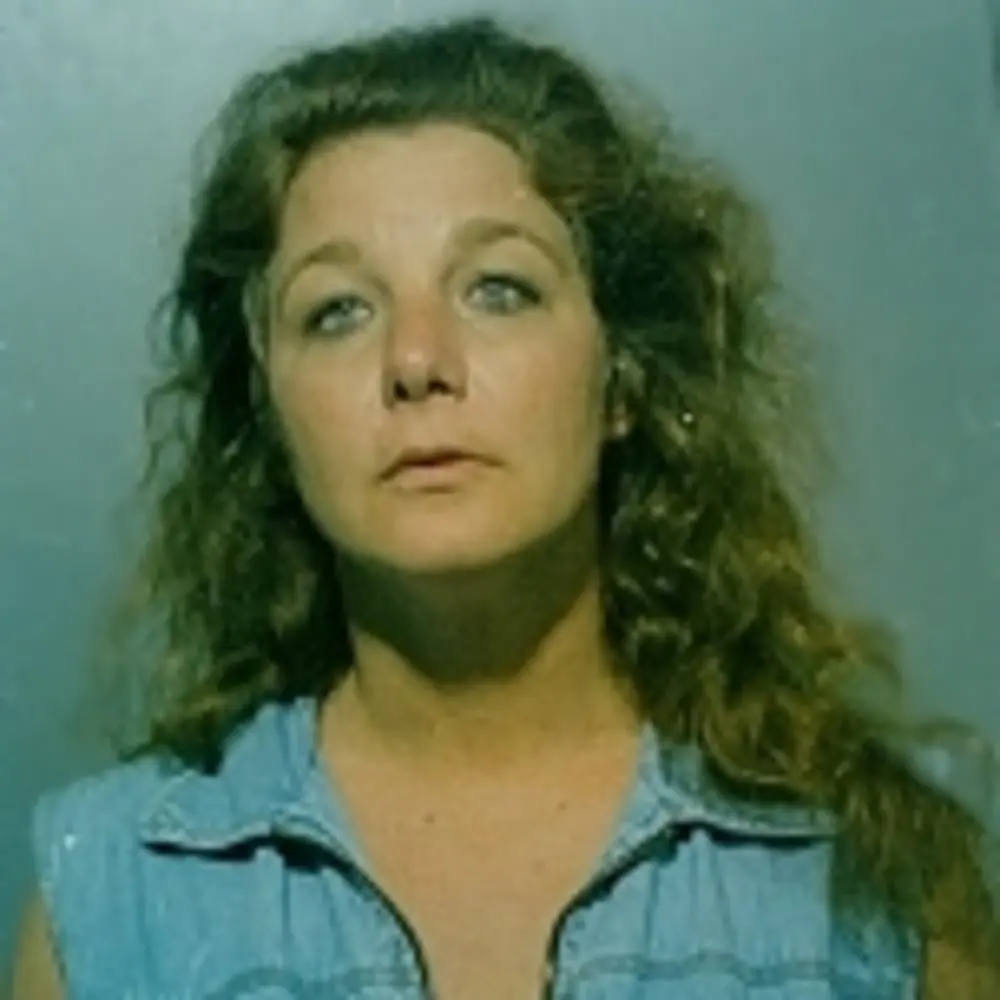
Diane Louise Augat was born on February 21, 1958, in New York. Her family relocated to Tampa, Florida while she was young, and she built her adult life in the Tampa Bay region. By the late 1970s she had married a man named Frederick Augat, and in the early years of the marriage she was a devoted stay-at-home mother. Her sister Denise recalled her in those years as someone who turned heads: pretty, put-together, the kind of person who carried expensive handbags and could fill a room of a thousand people and be the one everyone noticed. She loved camping, fishing, boating, and music. She took her children on weekends to campgrounds and kept her house spotlessly clean.
Then, in the late 1980s, her life began to come apart. Diane was diagnosed with bipolar disorder, the condition commonly known at the time as manic depression. The diagnosis came with a prescription, but Diane took her medication inconsistently, and her behavior grew increasingly erratic and difficult to manage. In 1988, her three children were removed from her custody. Prosecutors had filed child abuse charges against her; she was ultimately acquitted, but further complaints from the Department of Children and Families meant she did not regain her children. Her marriage to Frederick ended in divorce in 1991. The decade that followed was one of mounting instability, minor criminal arrests, and repeated mental health crises. Her mother, Mildred Young, said Diane had been taken into custody under Florida's Baker Act at least thirty-two times. The Baker Act is the state's involuntary psychiatric hold law, allowing physicians, judges, or law enforcement officers to initiate a mandatory mental health evaluation when an individual appears to be a danger to themselves or others.
A few weeks before her disappearance, Diane had once again been treated at a mental health facility. Her mother believed she should not have been released: that Diane required more sustained institutional care than the system had given her. Instead, she was discharged in the spring of 1998 and moved in with her sister in Hudson, Florida, to be around family while she tried to get her footing back. She still had a house of her own in Odessa, but the family felt it was better for her to be near people who could keep an eye on her. She had no medication with her.
The Morning She Left
On the morning of April 10, 1998, Diane's sister left for a doctor's appointment. Diane was in the house. When her sister returned that afternoon, Diane was gone. She had walked out wearing a white tank top, blue shorts, white sneakers, and her nails painted coral. She took nothing with her: no medication, no phone, no wallet in any meaningful sense.
That afternoon, a bartender at the Hay Loft Tavern at the intersection of Little Road and State Road 52 in the Hudson area saw Diane drinking. She began pacing in circles and acting in a manner strange enough that he cut her off and she left. The following day, April 11, a passing motorist saw a woman matching Diane's description walking north on U.S. Highway 19 near New York Avenue in Hudson. The sightings place her moving along a stretch of highway that would, in the days that followed, become the center of a deeply disturbing sequence of discoveries.
The Evidence That Followed
On April 13, Diane's mother received the phone call. The answering machine captured her voice screaming for help, and then the sound of someone taking the phone away. The caller ID showed the word "Starlight." Mildred called the number back repeatedly. No one ever picked up. She told reporters: "I think she knew who she was with." She said she feared whoever had her daughter was torturing her and keeping her alive only as long as it suited them. "I'm hoping that she's still alive, that they haven't killed her yet."
On April 16, six days after Diane disappeared, a woman walking to work along U.S. 19 near New York Avenue in Hudson noticed something on the ground that she initially mistook for a toy or a prop. She told her boyfriend, who went back to look. It was a human finger, severed just above the knuckle, with a nail painted red-coral. The boyfriend contacted the Pasco County Sheriff's Office, who arrived and documented the find. Because of Diane's prior criminal arrests, her fingerprints were on file. The finger was matched quickly and positively identified as Diane's right middle finger. There were also reports at the scene that a second finger had been present when the first was discovered, but law enforcement only ever confirmed and recovered the one.
The Pasco County Sheriff's Office stated that the find meant they had to seriously consider the possibility of foul play. A helicopter searched the area around U.S. 19 and New York Avenue. Nothing more was found.
Approximately a week after the finger was discovered, Diane's sister Deborah was working at a convenience store in Odessa, roughly a mile from Diane's own home, when a plastic bag was found in the outdoor freezer. Inside it were Diane's clothes, neatly folded. Deborah recognized them as her sister's. Investigators were never able to formally confirm the bag's contents belonged to Diane, but the family had no doubt. The location, just a mile from the Odessa house Diane still owned, suggested that whoever had her was familiar with the area.
Two years later, on November 24, 2000, a second bag appeared. Diane's brother's girlfriend, Terry Wilson, was at a Circle K gas station in Pasco County when she noticed a small clear zip-lock bag sitting on the lottery counter. The bag had the name "Diane" written on it in black permanent marker. Inside were a tube of bright pink lipstick, a tube of generic toothpaste, black eyeliner, and a bottle of Taboo perfume. Investigators said they would review security footage from the store to try to determine who had left it there. Nothing came of the lead publicly. Why a bag of Diane's personal items appeared in a gas station two years after she vanished, placed carefully on a counter and labeled with her name, has never been explained.
The Coral Sands Motel and Gary Robert Evers
One of the last places Diane was seen before her disappearance was the Coral Sands Motel on U.S. 19 in Hudson, a run-down roadside property that catered to the transient and the desperate. The motel was co-managed by a man named Gary Robert Evers and his girlfriend, Rose Kasper. They had been running the place since 1997 and lived on the premises in the motel's office trailer.
The Coral Sands sat approximately a quarter mile from the spot on U.S. 19 where Diane's finger was found. It was also near where the bag of her belongings turned up at the convenience store two years later. Diane's family was told by investigators that the Coral Sands was one of the last places she had been seen, and that Evers was considered a suspect in her disappearance. The Pasco County Sheriff's Office was publicly noncommittal about any direct connection, but Diane's sister Deborah stated plainly that she had been told by the case's initial detective that Evers was under scrutiny.
Evers had no criminal history in Florida prior to 2001. That changed in the early hours of June 27, 2001, when two masked men broke into the Coral Sands office and assaulted Rose Kasper. The following night, Evers invited a young man named Todd Kammers, 26, into the motel office, believing him to have been involved in the attack. He held Kammers at gunpoint, interrogated him, and then shot him repeatedly, emptying two magazines into the young man's body. Kammers had in fact had nothing to do with the robbery; the actual culprits were two other men who were later identified and convicted of a string of similar crimes. Kammers had gone to the Coral Sands that night specifically to clear his name.
Evers was arrested two days later and charged with first-degree murder. Diane's family saw the arrest as an opportunity: now police had been inside the motel office, had searched it, and might find something connecting Evers to Diane. Deborah Cronin asked a detective whether anything in the trailer connected her sister's case to Evers. She was told she might have to look at some things from the property. But if anything was recovered that tied Evers to Diane's disappearance, it was never disclosed publicly.
In April 2004, Gary Robert Evers was convicted of first-degree murder in the death of Todd Kammers and sentenced to life in prison. He died in the Florida state prison system in May 2012, having never been charged in connection with Diane's case and, as far as anyone outside the investigation knows, having never made any statement about what he knew or did not know about her fate. He is the only person ever publicly named as a possible suspect, and that connection died with him.
A Case Without a Body, a Confession, or an Ending
Diane Augat has been missing for more than twenty-seven years. The breadth of the evidence gathered in the weeks and months after her disappearance, the voice on the answering machine, the severed finger, the two bags of her belongings placed in public locations, suggests someone who was either tormenting her family or leaving a trail for investigators in a way that has never been deciphered. The deliberateness of it, the neatly folded clothes, the labeled zip-lock bag placed on a lottery counter, feels like a kind of theater, though its meaning has never been established.
Her case remains classified as an endangered missing person with foul play suspected. Diane's body has never been found. Her three children grew up without her, and her mother Mildred spent years trying to learn what happened to her daughter. Diane's case attracted renewed national attention in 2025 when it was featured on the true crime podcast Missing by Crawlspace Media, twenty-seven years after she walked away from her sister's house in Hudson wearing coral nail polish and carrying nothing.
One of Diane's children posted on a Websleuths forum years ago: "My mom is Diane, and this case has always left us with many more questions than answers."
It still does.
If you have any information about the disappearance of Diane Louise Augat, please contact the Pasco County Sheriff's Office at (727) 847-5878 and reference case number 98-15054. Tips can also be submitted anonymously to Crime Stoppers of Tampa Bay at 1-800-873-TIPS.
Sources
- The Charley Project: Diane Louise Augat
- DOE Network: Diane Louise Augat
- Tampa Bay Times: Fatal Shooting Revives Case of Missing Woman
- Morbidology: The Severed Finger and the Disappearance of Diane Augat
- Unresolved: Diane Augat
- International Missing Persons Wiki: Diane Augat
- NamUs: Diane Louise Augat – MP10727
- Crime Junkie Podcast: Missing Diane Louise Augat
- Missing Podcast (Crawlspace Media): Diane Augat – Episode 512
- Websleuths: Diane Augat, 40, Hudson, 10 Apr 1998