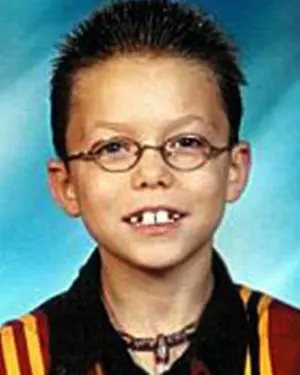
The Murder of Colton Levi Clark
On April 20, 2006, a caseworker from the Oklahoma Department of Human Services arrived at a rural property outside Wewoka, Oklahoma, for a scheduled appointment with nine-year-old Colton Levi Clark. It was around 4:00 in the afternoon, and the visit should have been routine. Instead, the caseworker was told that Colton was missing. His window was open, his shoes and backpack were gone, and his aunt and uncle, who served as his legal guardians, claimed the boy had simply run away. What followed was one of the most challenging murder investigations in Oklahoma history, a case that would take more than a decade to solve and would hinge entirely on the courage of one witness: Colton's older brother, who survived the same abuse that likely killed his sibling.
Colton Levi Clark was born on May 24, 1996. He came into a world already fractured by addiction and dysfunction. His biological parents struggled with alcoholism and drug addiction, creating an environment so dangerous that the state of Oklahoma eventually removed both Colton and his older brother from their custody. The boys had been born into chaos. According to later accounts, one of the children was born cocaine-addicted while their mother was incarcerated. There were allegations of child molestation, involvement in child pornography, and the boys being prostituted to pay off drug debts. The biological parents' home was a nightmare, and when the state intervened, it seemed like a rescue.
Colton and his brother, originally named Austin but later renamed Homer Justice Levi Clark after their adoption, entered the foster care system. In 2003, when Colton was just seven years old and Homer was nine, they went to visit their uncle and aunt on their five-acre farm outside Seminole, about 50 miles east of Oklahoma City. James Rex Clark and Rebecca Faith Clark seemed like a refuge. The farm had animals, ponds to fish in, trees to climb, and wide open spaces. For two boys who had grown up poor in the city, surrounded by violence and addiction, the farm felt like paradise.
Initially, the Clarks treated the boys well. Rex and Rebecca were kind during the foster care period, showing the children affection and introducing them to a lifestyle the boys had never known. The boys fell in love with their new life. Eventually, Rex and Rebecca formally adopted both children. The boys were renamed with symbolic significance, according to Rebecca. Colton became Colt Levi River Clark, and Austin became Homer Justice Levi Clark. Rebecca later claimed the boys chose these names themselves for a fresh start, to leave behind the trauma of their biological family. It should have been a new beginning, a chance for two abused children to heal and thrive.
But according to Homer's later testimony, everything changed after the adoption was finalized. The love and kindness evaporated almost overnight. What replaced it was systematic torture that would last for years. Homer testified that he and Colton were subjected to beatings with open hands, closed fists, broomsticks, and electric wires. They were struck with a cattle prod, with Rex Clark using a red and white electric cattle prod to shock the boys' genitals. Homer's testimony painted a picture of daily terror, of abuse that grew in severity as time passed.
The physical abuse left visible marks. Homer testified that his face would become so swollen from being hit and slapped that he couldn't wear his glasses. School photographs of Colton showed bruises on his arms and face, clear signs that something was profoundly wrong. The Clarks pulled both boys out of public school soon after these telltale injuries became visible, claiming they would homeschool the children. In reality, the decision to homeschool appears to have been motivated by a desire to hide the abuse from mandatory reporters and other adults who might intervene.
Beyond the physical torture, the boys endured psychological abuse that was equally damaging. Rex Clark forced both children to write bizarre false sexual fantasies in journals, accusing them of being sexual deviants. This form of psychological manipulation served to shame and control the boys, making them question their own reality and further isolating them from any potential help. The farm that had once seemed like paradise had become a prison where two young boys lived in constant fear.
The Oklahoma Department of Human Services was supposed to protect these children. As wards of the state, even after adoption, the boys should have been monitored through regular caseworker visits. The Clarks were supposed to meet with DHS representatives to ensure the children's wellbeing. But according to investigators, each time a meeting was scheduled, Rex and Rebecca would cancel. The DHS kept rescheduling, and the Clarks kept canceling. This pattern continued until finally, the agency insisted on a meeting and set a firm appointment for April 20, 2006.
The Clarks' story about what happened that day would change multiple times. Initially, they told authorities they had plans to take Colton to Norman for a 1:00 PM appointment with a psychiatrist. Rebecca claimed that Rex went to take a nap before the appointment while she got ready. When she looked for Colton, his window was open and he was gone. She said she wasn't initially concerned, thinking he might be waiting in the car. When she checked the vehicle and he wasn't there, she supposedly realized something was wrong. The Clarks claimed they searched the property but couldn't find him. They noticed his shoes and backpack were missing and concluded he had run away.
But the story had immediate problems. The Clarks told police that Colton was frightened of the DHS and had jumped out the window before the caseworker arrived. They claimed they never saw him again. When police interviewed the couple, investigators noted that Rex and Rebecca seemed uninterested in finding the boy and didn't appear worried about him. Perhaps most tellingly, they referred to Colton in the past tense. Rex told police he had trained both nephews in survival techniques and thought Colton could live on his own for months in the wilderness. The Clarks initially agreed to take a polygraph test but changed their minds and refused to go through with it.
What the Clarks didn't tell authorities was what Homer knew. According to Homer's later testimony, about a month before Colton disappeared, in early March 2006, the Clarks accused Colton of stealing a turquoise ring. The beating that followed was brutal even by the standards of the abuse the boys had already endured. Homer testified that one night around 2:00 or 3:00 AM, he woke up to the sounds of Rex and Rebecca screaming at Colton and beating him. He could hear his younger brother being assaulted in another part of the house.
When Homer finally saw Colton, his little brother was lying on a sofa, bloodied and motionless. Colton's face was black and blue, the result of a savage beating. Homer wasn't even sure if Colton was breathing. Exhausted and traumatized, Homer went back to sleep. When he woke up a few hours later at 5:15 AM, both Colton and the sleeping bag he had been wrapped in were gone. Rex was already awake and dressed, which struck Homer as odd since his uncle usually didn't get up that early.
When Homer asked where Colton was, Rex and Rebecca initially said they didn't know. When Homer suggested calling the police, Rex kicked him in the abdomen and said they were not going to call anyone. Later, Rex and Rebecca told Homer that Colton's biological father had come and picked him up. They threatened to kill Homer if he ever told anyone what he had seen. The Clarks made the eleven-year-old boy rehearse multiple false stories to explain his brother's disappearance, drilling him on what to say if anyone asked questions.
After Colton's disappearance, a massive search was launched. Teams scoured the area on ATVs and horseback. Helicopters flew overhead. Dogs and volunteers from Seminole and Hughes Counties searched more than 200 acres around the Clark property. The search continued through the night until 4:00 AM and resumed the following day. Texas EquuSearch, a volunteer organization that specializes in finding missing persons, came to Oklahoma to help look for Colton. The search yielded nothing. No trace of the nine-year-old boy was ever found.
Sheriff Joe Craig expressed the frustration that would haunt the investigation for years. He told reporters that he went to bed every night seeing Colton's face, wondering why they couldn't find the child. The sense of failure was palpable among the law enforcement officers who worked the case. They had searched everywhere they could think to search, but the five-acre property and surrounding areas revealed no clues about what had happened to Colton Levi Clark.
For Homer, the aftermath of Colton's disappearance was complicated by fear and psychological manipulation. He had been threatened with death if he talked. He had been forced to rehearse lies. At eleven years old, he was terrified of his aunt and uncle and had been conditioned to believe they had absolute power over him. When investigators initially spoke to Homer, his responses were guarded and unhelpful. He later admitted he was scared and brainwashed, unable to give authorities the information they needed. He told them variations of the stories the Clarks had made him practice.
The case grew cold. Homer eventually fled the Clarks' home, and when he was found, Rex and Rebecca relinquished custody. The boy who had once been named Austin, then renamed Homer, was adopted by another family and moved to Memphis, Tennessee. He changed his name again, this time to T.J. Sloan, perhaps hoping to finally leave behind the trauma that had defined his childhood. But even as he tried to build a new life, he thought about Colton every single day. He wondered where his little brother was. He wondered if anyone would ever be held accountable for what happened.
In September 2015, nine years after Colton disappeared, the Seminole County Sheriff's Office and the Oklahoma State Bureau of Investigation formally reopened the case. New investigators took a fresh look at the evidence, the witness statements, and the glaring inconsistencies in the Clarks' story. They reached out to anyone who might have information about the case. That outreach eventually led them to T.J. Sloan.
When Sloan learned through an internet search that his brother's case had been reopened, he made the difficult decision to come forward. He contacted Seminole County authorities and, for the first time, told them the full truth about what he and Colton had endured. He described the systematic abuse, the cattle prod, the beatings, the psychological torture. He told them about the night in March 2006 when he heard Colton being beaten, about seeing his brother's bloodied and motionless body on the sofa, about Colton disappearing before dawn. He described the threats, the rehearsed lies, the atmosphere of terror that had prevented him from speaking up years earlier.
Armed with this new testimony, investigators obtained search warrants for the Clark property. They brought in forensic archaeologists and cadaver dogs. They meticulously searched the five acres, looking for any sign of Colton's remains. Despite their thorough efforts, they found nothing. The property yielded no physical evidence of murder, no body, no burial site. But prosecutors believed they had enough to proceed with charges even without remains.
In April 2016, ten years after Colton disappeared, James Rex Clark and Rebecca Faith Clark were arrested. They were charged with first-degree murder, conspiracy to commit a felony, child abuse, and child neglect. The arrest shocked some in the community, though others had long suspected the Clarks were responsible for the boy's disappearance. The couple maintained their innocence, insisting they had not killed Colton and that he had simply run away.
The case went to trial in October 2017 in Pontotoc County after the Clarks successfully petitioned for a change of venue from Seminole County. The trial was emotionally charged from the beginning. T.J. Sloan, now 23 years old, was the prosecution's key witness. District Attorney Paul Smith later acknowledged that without Sloan's testimony, there would have been no case. Rex and Rebecca Clark would have gotten away with murder.
Sloan took the stand and looked directly at his former tormentors as he testified. He described the abuse in graphic detail. He showed the courtroom scars that still marked his body years later. He recounted the night Colton was beaten and the morning his brother disappeared. When describing the false accusations of sexual deviance, Sloan turned to Rex Clark and said in a matter-of-fact voice, "I will look you in the face and tell you I'm not like that." Rex smiled in response, an expression that seemed to anger Sloan and disturb everyone in the courtroom.
The defense attorney objected to what he called "personal attacks," but Sloan's testimony was devastating to the Clarks' case. Here was a survivor, someone who had lived through the same abuse that killed his brother, willing to face his abusers in court and tell the truth despite years of threats and intimidation. The jury heard about the cattle prod used on the boys' genitals, about the beatings with electric wires and broomsticks, about the visible injuries that caused the Clarks to pull the children from school, about the Department of Human Services visits that were repeatedly canceled.
After a two-week trial, the jury deliberated for less than three hours. On October 9, 2017, they returned guilty verdicts on all five charges: first-degree murder and four counts of child abuse by injury. James Rex Clark, then 67 years old, and Rebecca Faith Clark, then 61, were convicted of murdering nine-year-old Colton Clark and abusing both him and his brother. The courtroom erupted in emotion. District Attorney Paul Smith, who had been involved with the case since 2006, expressed relief that justice had finally been achieved for Colton's memory and for the family members who had waited so long.
At sentencing, both Rex and Rebecca Clark were given life in prison without the possibility of parole. As they were being led out of the courtroom in handcuffs, the Clarks still maintained their innocence. Rebecca Clark insisted, "We are innocent," as deputies escorted her away. Rex Clark's behavior was more disturbing. He turned to T.J. Sloan and said he would live to urinate on Sloan's grave. When a reporter asked Rex where Colton's body was, the convicted murderer reacted with aggression, his anger barely contained even in shackles. Sloan's response to Rex's threats was measured. He called his uncle "a big, old, angry, cowardly man" and said nobody should be scared of him.
Days after the conviction, the Seminole community gathered for a candlelight memorial and balloon release in honor of Colton. About a hundred people stood outside the Reynolds Wellness Center as the sun set, releasing balloons into the sky to remember a boy who had lived only nine years. T.J. Sloan attended and spoke to the gathering. He said the event was not meant to be sad, but rather a celebration of Colton's life. He told those assembled that Colton had lived his nine years to his full potential, even though his life had been cut tragically short.
The convictions have been upheld on appeal. Rebecca Clark's appeal was rejected by the Oklahoma Court of Criminal Appeals in October 2019, with the court finding no merit to her claims of improper evidence, improper statements during trial, or ineffective assistance of counsel. James Rex Clark's appeal was similarly rejected shortly thereafter. The couple remains incarcerated in Oklahoma state prisons, where they will spend the rest of their lives.
But one crucial question remains unanswered: where is Colton Levi Clark? Despite extensive searches of the Clark property, despite the testimony about what happened that March night in 2006, despite forensic experts combing through every inch of the five-acre farm, Colton's body has never been found. District Attorney Paul Smith recalled a chilling conversation with Rex Clark after his arrest. According to Smith, Rex laughed and said, "You are never going to find him. You are never going to find Colton Clark."
The absence of a body made the prosecution's case significantly more difficult, but Smith and his team persevered. They built their case on the testimony of a survivor, on the documented abuse, on the inconsistencies in the Clarks' stories, on the suspicious behavior and lack of concern they showed when Colton disappeared. The jury believed T.J. Sloan, and they believed the circumstantial evidence pointed overwhelmingly toward murder. But the question of what the Clarks did with Colton's body continues to haunt everyone involved in the case.
Forensic archaeologist Kent Buehler, who participated in the searches of the Clark property, expressed disappointment at not finding Colton's remains but said the successful conviction made all the effort worthwhile. There are countless theories about what might have happened to the body. The five-acre property had ponds and wooded areas. There were numerous places where remains could have been concealed. The Clarks had access to vehicles and could have transported the body off the property. Without a confession, without physical evidence, the location of Colton's remains may never be known.
For T.J. Sloan, now in his thirties and living in Tennessee, the convictions brought a measure of justice but not complete closure. He has been praised as a hero by prosecutors and investigators who acknowledge the case would have been impossible without his willingness to come forward and testify. Paul Smith stated plainly, "We did not have a case without him. Rex and Rebecca would have gotten away with murder of Colton." Sloan has downplayed his role, instead thanking law enforcement, the district attorney's office, and the people of Seminole who supported him through the trial.
Sloan has also spoken publicly about wanting his story and Colton's story to be heard by other children who are suffering abuse and are afraid to come forward or ask for help. He survived years of torture and lived with guilt about not being able to save his brother, but he eventually found the courage to tell the truth. His testimony not only brought his abusers to justice but also sent a powerful message about resilience and the importance of speaking up, even when it seems impossible.
The case of Colton Levi Clark exposes the systematic failures that can occur when multiple institutions fail to protect vulnerable children. Colton and Homer were removed from one abusive situation and placed into another. The Department of Human Services scheduled meetings that were repeatedly canceled without adequate follow-up. Teachers saw bruises on Colton but the children were removed from school before any intervention could occur. The foster care and adoption system, meant to provide safety, instead delivered these boys into the hands of people who would torture and kill them.
Sheriff Joe Craig's words about seeing Colton's face every night reflect the weight that missing children's cases place on investigators, particularly when those children are likely deceased and their killers walk free for years. The reopening of cold cases, the advancement of forensic techniques, and the willingness of survivors to come forward can sometimes bring justice even when the odds seem insurmountable. But the absence of Colton's body is a reminder that some questions may never be fully answered.
Colton Levi Clark was nine years old when he was last seen alive. He had brown hair and hazel eyes. He wore silver glasses. He had a scar above his left eyebrow. He was a child who had already survived tremendous trauma in his short life, who had been removed from his biological parents only to be placed with relatives who subjected him to unspeakable cruelty. He deserved to grow up, to heal from his early childhood experiences, to discover who he might become. Instead, he was beaten to death by the aunt and uncle who were supposed to protect him, and his body was hidden so well that it has never been recovered.
His brother survived to tell the story. The killers were convicted and will die in prison. The community remembered him with balloons and candlelight. But somewhere, in a location known only to Rex and Rebecca Clark, Colton Levi Clark waits to be found. Until that day comes, his case serves as a tragic reminder of how society can fail its most vulnerable children and why systems designed to protect them must be vigilant, thorough, and unwilling to accept excuses when children's lives are at stake.
If you have any information regarding the disappearance of Colton Levi Clark or the location of his remains, please contact the Seminole County Sheriff's Department at (405) 257-5445 or (405) 382-9340.
Sources
Colton Levi Clark - The Charley Project
Murder trial underway - The Ada News
Parents arrested in 2006 disappearance - Tulsa World
It's haunting: Questions remain 17 years later - KOCO
Oklahoman hopes rulings end murder case - Seattle Times
Man, woman found guilty of abusing, killing Colton Clark - KOCO
Couple sentenced to life in slaying of Colton Clark - KOCO
Seminole celebrates Colton Clark's life - KFOR
Murder conviction upheld - KXII
Trial moved for couple charged with murder - KFOR
Aunt & Uncle Convicted of Murder - Medium
Featured Cases: Colton Levi Clark